
Best IPTV Provider
IPTV providers deliver television content through internet protocols instead of traditional cable or satellite systems, offering access to thousands of live channels, on-demand content, and sports programming across multiple devices. The market has expanded significantly, with dozens of services claiming to offer the best streaming experience. Choosing the right provider requires understanding key factors like channel selection, streaming quality, device compatibility, and legal compliance.
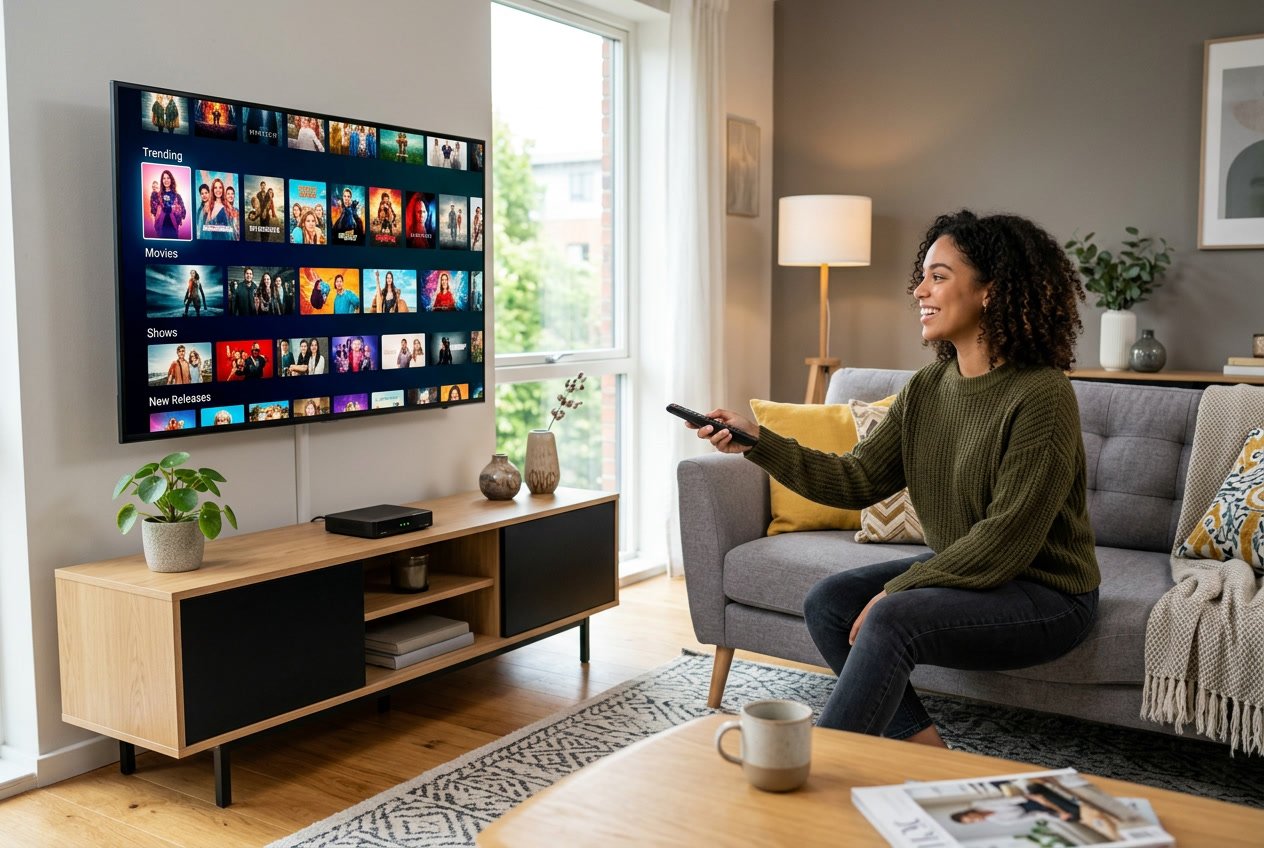
The best IPTV providers in 2026 combine extensive channel lineups of 20,000+ channels, reliable 4K streaming capabilities, multi-device support, and transparent pricing with proper licensing agreements. Recent testing of over 30 providers revealed significant differences in performance metrics, including buffering rates, uptime reliability, and customer support responsiveness. Top-performing services averaged fewer than 0.6 buffering interruptions per hour on standard 200 Mbps connections.
Your choice should align with your specific viewing needs and geographic location. Some providers specialize in regional content for Nordic countries or North America, while others focus on global channel diversity. Understanding the differences between licensed and unlicensed services is essential, as unlicensed IPTV can carry legal risks including copyright infringement penalties and potential ISP restrictions.
Key Takeaways
- Top IPTV providers offer 20,000+ channels with 4K streaming, minimal buffering, and support for multiple devices simultaneously
- Legal IPTV services with proper licensing provide safer alternatives to unlicensed providers that may expose users to copyright infringement risks
- Free trials ranging from 24 hours to 3 days allow testing of streaming quality and channel selection before committing to paid subscriptions
Understanding IPTV and IPTV Providers
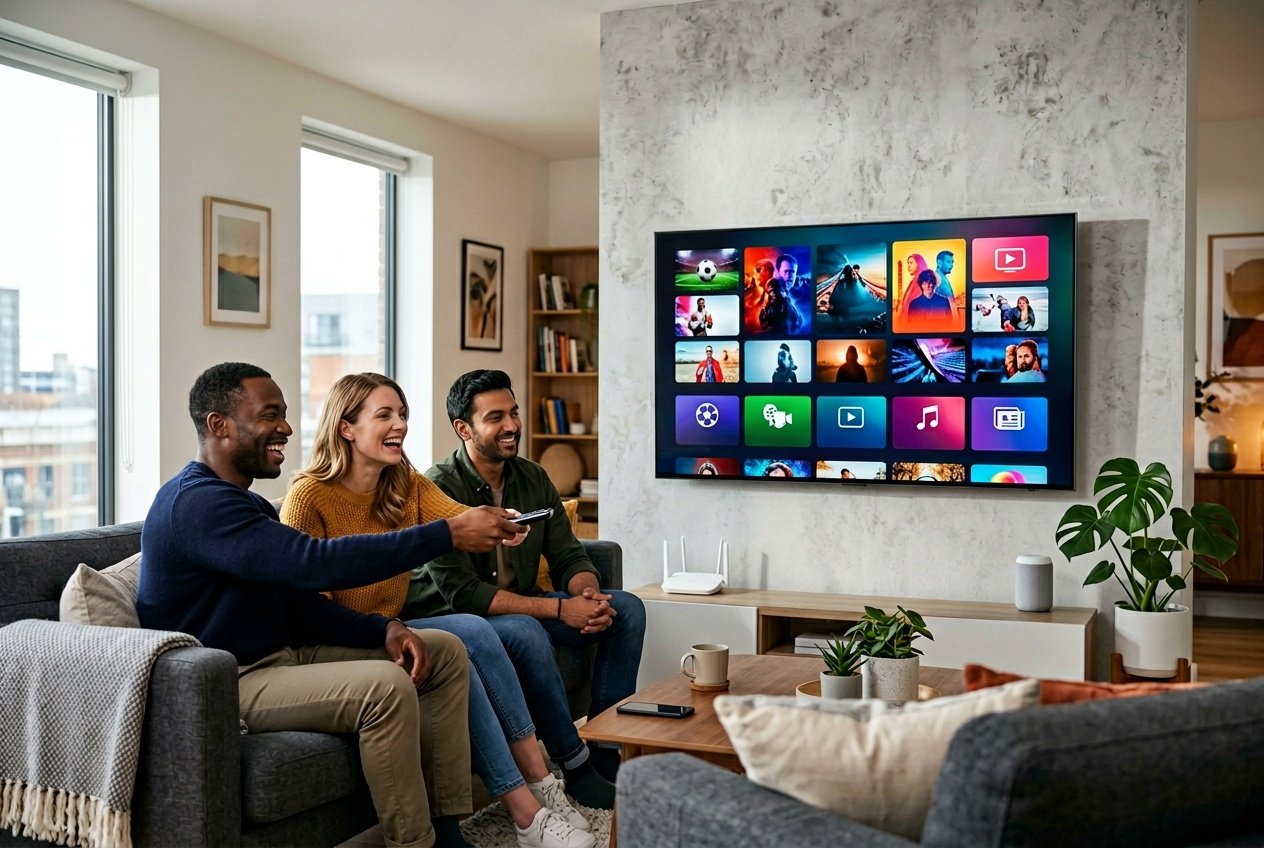
IPTV delivers television content through internet protocols rather than traditional broadcast methods, creating a fundamentally different viewing experience. The technology enables live TV, on-demand content, and time-shifted programming across multiple devices, but understanding the differences between legal and unlicensed providers is essential for making informed decisions.
What Is IPTV?
Internet Protocol Television (IPTV) transmits television content through internet networks instead of cable, satellite, or terrestrial broadcast signals. Your content streams as data packets over broadband connections, similar to how you access websites or stream music.
IPTV operates through three primary delivery models. Live television streams events and broadcasts in real-time, matching traditional TV schedules. Video on demand (VOD) provides access to libraries of movies and shows you can watch whenever you choose. Time-shifted media allows you to pause, rewind, or watch previously aired programs through catch-up TV features.
The technology requires a stable internet connection and compatible devices. You can access IPTV through smart TVs, streaming boxes, smartphones, tablets, or computers. Most services use dedicated apps or media players that decode the streamed content for display on your screen.
Types of IPTV Providers
Legal IPTV services operate with proper licensing agreements from content owners and broadcasters. These providers pay for distribution rights and comply with copyright laws in their operating regions. Examples include subscription-based platforms that offer licensed content through legitimate contracts.
Unlicensed IPTV providers distribute content without proper authorization from copyright holders. These services often advertise thousands of channels at significantly lower prices than legal alternatives. Using unverified IPTV services carries legal risks including potential copyright infringement penalties, ISP throttling, and service termination.
Subscription-based IPTV services charge recurring fees for access to their channel lineups and content libraries. Free IPTV options exist but typically offer limited channels or rely on ad-supported models. Regional providers focus on specific geographic markets, while international services aggregate content from multiple countries.
How IPTV Works
IPTV service providers maintain servers that store and transmit content to subscribers. When you select a channel or program, your device sends a request to the provider’s server through your internet connection. The server responds by streaming the requested content as compressed data packets.
Your IPTV app or set-top box receives these data packets and decodes them into video and audio signals. Buffering occurs when your device downloads a small portion of content ahead of playback to ensure smooth viewing. Higher bandwidth connections support better video quality, with 4K streams requiring more data than standard definition.
Content delivery networks (CDNs) help distribute the streaming load across multiple servers in different locations. This infrastructure reduces latency and prevents bottlenecks during high-traffic periods. Your provider’s server infrastructure quality directly affects stream reliability, buffering frequency, and overall viewing experience.
Key Features of the Best IPTV Providers

Quality IPTV providers distinguish themselves through specific technical capabilities and content offerings. Your viewing experience depends on channel selection, content libraries, regional availability, and navigation tools that help you find programs efficiently.
Live TV Channels and Channel Lineup
The number of live TV channels varies dramatically across IPTV providers, with offerings ranging from 4,000 to over 65,000 channels. However, raw channel count matters less than access to the specific live channels you actually watch.
You should verify that your preferred provider carries your essential channels before subscribing. Premium services typically include major networks, sports channels, news outlets, and entertainment options in HD or 4K quality. Testing data shows that top-performing providers maintain fewer than 0.6 buffering interruptions per hour during live broadcasts.
Channel stability matters more than quantity. A provider with 10,000 reliable IPTV channels outperforms one offering 50,000 channels that frequently buffer or go offline. Check whether channels are available in standard definition, HD, or 4K, as this directly impacts your viewing quality.
Many providers organize their channel lineup by category, making it easier to navigate between sports, movies, news, and other content types. This categorization becomes critical when dealing with large channel libraries.
Video on Demand and VOD Library
VOD libraries complement live TV channels by providing movies and series you can watch at any time. The best providers offer between 120,000 and 500,000 on-demand movies and TV shows, though these numbers should be verified rather than taken at face value.
Your VOD library should include recent releases alongside classic content across multiple genres. Search functionality becomes essential when dealing with large catalogs, allowing you to locate specific titles quickly rather than browsing endlessly.
Update frequency matters significantly. Providers that regularly refresh their VOD content with new releases provide better value than those with stagnant libraries. Some services specialize in specific content regions, offering extensive Nordic, European, or American productions depending on their target audience.
Streaming quality for on-demand content should match or exceed live channel quality. Look for providers that offer VOD in HD or 4K resolution with minimal loading times between selections.
International and Regional Channels
International channels expand your viewing options beyond local programming. Providers specializing in regional content typically offer dedicated channels from specific countries or language groups.
Nordic-focused services deliver channels from Norway, Sweden, Denmark, Finland, and Iceland, while others concentrate on Spanish, Arabic, South Asian, or other international markets. If you require content from specific regions, verify the actual channel list rather than relying on advertised totals.
Regional channels serve expatriate communities and language learners who want access to programming from their home countries. The best providers maintain licensing agreements or partnerships that ensure stable streams for these specialized channels.
Some services optimize their server infrastructure for specific regions, reducing latency and improving stream quality for viewers in those areas. This regional optimization can significantly improve your experience if you’re watching content from geographically distant sources.
EPG and TV Guide Functionality
Electronic Program Guides (EPG) display scheduling information for live TV channels, showing what’s currently playing and upcoming programs. A functional TV guide transforms your IPTV service from a simple streaming platform into an organized viewing experience.
Quality EPG systems provide program descriptions, start times, duration, and genre information. You can browse upcoming shows, set reminders, or plan your viewing schedule days in advance. Some providers include catch-up TV functionality within their EPG, allowing you to watch programs that aired earlier.
EPG accuracy varies between providers. The best services update their guides automatically and maintain accurate scheduling information across all channels. Poor EPG implementation results in missing data, incorrect times, or outdated information that makes navigation frustrating.
Advanced EPG features include search capabilities, favorites lists, and parental controls integrated directly into the TV guide interface. These tools help you manage large channel lineups efficiently.
Streaming Quality and User Experience

Streaming quality directly impacts your viewing satisfaction, and server reliability determines whether your service works when you need it. Anti-freeze technology, HD and 4K options, cloud DVR capabilities, and consistent uptime separate functional providers from frustrating ones.
HD and 4K Streaming Options
HD streaming has become the baseline standard for IPTV services in 2026, with most providers offering at least 1080p resolution on their primary channels. 4K IPTV options are now available from leading providers, though channel availability varies significantly between services. Some providers offer 4K content exclusively for sports and premium movies, while others include it across news, entertainment, and international channels.
Your internet connection speed directly affects which streaming quality you can access. HD IPTV typically requires 5-8 Mbps, while 4K streaming demands 25 Mbps or higher for stable playback. Many providers automatically adjust resolution based on your bandwidth, but this can result in inconsistent picture quality during peak hours.
Not all providers offer multiple quality options for every channel. Budget services often limit 4K access to premium tiers, while comprehensive providers include SD, HD, FHD, and 4K across their channel lineup without additional fees.
Buffer-Free and Seamless Streaming
Buffer-free streaming depends on server capacity, content delivery networks, and the technology providers use to manage traffic. Anti-freeze technology has become a standard feature among top-tier services, actively preventing interruptions by preloading content and managing bandwidth distribution. Some providers specifically advertise antifreeze 10.0 or similar systems that reduce lag during high-traffic periods.
Seamless streaming requires more than just fast servers. Your device’s processing power, network stability, and the provider’s encoding efficiency all contribute to performance. Services that compress video without sacrificing quality deliver smoother playback, especially on mobile devices or slower connections.
Peak viewing hours expose streaming stability issues that might not appear during off-peak testing. Providers with insufficient server capacity experience frequent buffering between 6 PM and 10 PM when demand spikes across their user base.
Server Stability and Uptime
Server stability determines whether your IPTV service functions reliably day after day. Providers claiming 99.9% uptime should experience less than 9 hours of downtime annually, though actual performance varies. Services with distributed server networks handle traffic better and recover faster from technical issues than those relying on single-location infrastructure.
Uptime statistics don’t account for partial outages where specific channels or features fail while the main service remains operational. Geographic server distribution helps maintain stability for international content, as providers can route traffic through alternative servers when primary ones experience issues.
Scheduled maintenance windows affect uptime differently than unexpected crashes. Transparent providers notify users about planned downtime, typically scheduling maintenance during low-traffic hours to minimize disruption.
Cloud DVR and Time-Shifted Viewing
Cloud DVR functionality lets you record live content and watch it later without external storage devices. Storage capacity varies widely, with some providers offering 50 hours and others providing unlimited recording space. Time-shifted viewing differs from cloud DVR by letting you pause, rewind, or restart live broadcasts without formally recording them.
Catch-up features extend time-shifted viewing by making previously aired content available for 24 to 48 hours after broadcast. This eliminates the need to manually record shows you missed, though not all providers include this feature across all channels.
Recording quality matches your streaming quality settings, meaning 4K recordings consume significantly more cloud storage than HD versions. Some services limit simultaneous recordings or restrict cloud DVR to specific channel categories, reducing the feature’s practical value for households with diverse viewing preferences.
Device Compatibility and Multi-Device Streaming

Modern IPTV providers support a wide range of devices and allow multiple simultaneous connections, letting you watch different content on various screens throughout your home. The best services offer dedicated apps, flexible streaming options, and the ability to connect several devices under one subscription.
Supported Streaming Devices
You can access IPTV services on nearly any device with an internet connection. Smart TVs from Samsung, LG, and Sony typically support IPTV through built-in app stores or browser access.
Android TV Box devices provide excellent compatibility with most IPTV services. These boxes run full Android operating systems and support virtually all IPTV applications. Fire TV Stick 4K remains one of the most popular choices because of its affordability and seamless app installation process.
MAG Box devices are specifically designed for IPTV and work particularly well with providers that support MAG portal connections. You can also stream on iOS and Android smartphones, tablets, Windows and Mac computers, and gaming consoles like Xbox and PlayStation.
IPTV Apps and Setup
IPTV Smarters Pro is the most widely used application across Android, iOS, and Fire TV platforms. The app supports Xtream Codes API, M3U playlists, and offers an intuitive interface with EPG integration. You enter your provider’s login credentials or playlist URL to begin streaming.
TiviMate is another popular choice for Android-based devices. It provides advanced features like catch-up TV, recording capabilities, and multiple playlist support. The app requires a one-time setup where you input your IPTV provider’s information.
Other reliable apps include:
- GSE Smart IPTV for iOS devices
- Perfect Player for Windows and Android
- SET IPTV for Samsung and LG smart TVs
- Kodi with IPTV Simple Client add-on
Simultaneous Streams
Most IPTV providers limit the number of devices that can stream at the same time. Entry-level plans typically include 1-2 simultaneous connections, while premium subscriptions offer 3-5 concurrent streams.
You can watch different channels on separate devices simultaneously, which suits households with multiple viewers. Some providers charge extra for additional connections beyond the base package allowance.
The actual number of simultaneous streams you need depends on your household size and viewing habits. A family of four might require at least three connections to avoid conflicts during peak viewing times.
Multi-Device Compatibility
Multi-device streaming lets you start watching content on one device and continue on another without losing your place. Your IPTV account credentials work across all supported platforms using the same login information.
You maintain a unified experience across devices through cloud-based account syncing. Your favorites, recordings, and viewing history remain consistent whether you switch from your Fire TV Stick to your smartphone.
Most providers support at least 5-10 registered devices per account, though only a limited number can stream simultaneously. You can install the IPTV app on your living room TV, bedroom tablet, and mobile phone, then activate whichever device you’re currently using.
Pricing, Trials, and Customer Support
IPTV providers use various pricing structures ranging from budget-friendly options under $10 monthly to premium services exceeding $80. Most legitimate providers offer trial periods and multiple payment methods while maintaining customer support channels to assist subscribers.
Affordable IPTV and Pricing Models
IPTV pricing varies significantly based on channel selection and features. Budget IPTV services like Frndly TV start at $7.99 monthly for 40+ channels, while Philo offers 70+ entertainment channels at $28 monthly. Mid-range options include Sling TV at $45.99-$60.99 depending on your package choice.
Premium IPTV subscriptions with extensive sports coverage cost more. YouTube TV charges $82.99 monthly for 100+ channels with unlimited DVR. Hulu + Live TV bundles three services for $89.99 monthly. DirecTV Stream ranges from $89.99 to $159.99 based on your selected tier.
Specialized IPTV providers like Flash4KIPTV.Com and #1 IPTV Provider start around $16.99 monthly with discounts for longer commitments. Six-month and annual plans typically reduce your per-month costs by 20-30%.
Money-Back Guarantee and Free Trials
Most legitimate IPTV services provide free trial periods between 3-7 days. Flash4KIPTV.Com offers a 36-hour trial to test streaming quality before purchasing. Some providers extend trials to 24 hours for basic testing of channel availability and interface usability.
You should use trial periods to verify streaming performance on your home network and confirm channel availability in your region. Test during peak viewing hours to assess buffering and stability. Money-back guarantees typically range from 7-30 days, though policies vary by provider.
Free IPTV trials let you evaluate the user interface, EPG functionality, and DVR features. Check whether local channels stream properly in your market and whether sports programming includes your preferred regional networks.
24/7 Customer Support
Reliable customer support distinguishes premium providers from budget options. Top-rated services like #1 IPTV Provider maintain average response times under 12 minutes. Flash4KIPTV.Com advertises 24/7 human customer support rather than automated chatbots.
Support channels typically include live chat, email ticketing, and help documentation. American-based customer support teams understand US time zones and can assist during critical viewing periods like live sports events. Response quality matters more than availability—look for providers with knowledgeable support staff who can troubleshoot device compatibility and streaming issues.
YouTube TV and Hulu + Live TV provide comprehensive help centers with troubleshooting guides. Smaller IPTV providers may offer limited support hours or slower response times.
Payment Options and Security
Reputable IPTV providers accept multiple payment methods including credit cards, PayPal, and cryptocurrency. Flash4KIPTV.Com supports credit card, PayPal, and crypto payments for subscriber flexibility. Major services like YouTube TV and Hulu + Live TV process payments through secure platforms with fraud protection.
You should verify that your chosen provider uses encrypted payment processing. Avoid services requesting wire transfers or gift cards as sole payment options. Subscription renewals typically process automatically unless you cancel before the billing cycle.
Payment security extends to data protection. Legitimate providers maintain privacy policies compliant with US regulations. Check whether your payment information remains encrypted and whether the service shares data with third parties.
Legal Considerations and Safe Streaming Practices
Choosing an IPTV provider requires understanding the critical differences between licensed and unlicensed services, along with proper privacy protections. The legitimacy of your streaming service directly impacts your legal safety, content quality, and overall viewing experience.
Legal IPTV vs Unlicensed IPTV
Legal IPTV services operate with proper licenses from content creators and broadcasters. These providers maintain partnerships with major media companies and networks to deliver content legally over the internet.
You can identify legitimate services through several markers. Legal providers openly display their corporate information and partnerships. They offer dedicated apps through official app stores and maintain transparent pricing structures.
Unlicensed IPTV services operate without proper content rights. These providers often advertise suspiciously low prices and operate through offshore hosting. They typically lack official apps and may require cryptocurrency payments.
Legal IPTV services in the USA include YouTube TV, Fubo TV, Hulu + Live TV, and Sling TV. These platforms comply with DMCA and broadcasting regulations. They invest in infrastructure to deliver reliable streaming quality and customer support.
Unlicensed services carry legal risks for users. While enforcement primarily targets providers, subscribers can face consequences including service termination and potential legal action.
VPN Support and Privacy
VPN support varies significantly between legal and unlicensed IPTV services. Legal IPTV providers generally don’t require VPN usage since they operate within proper licensing frameworks.
If a service insists you use a VPN, this signals potential illegitimacy. Legal services focus on regional licensing agreements rather than IP masking. They implement their own geo-restrictions based on content rights.
Many users still choose VPNs for general privacy protection while streaming. This practice is acceptable with legal services, though not necessary for legitimacy. Your ISP can see your streaming activity regardless of the service’s legal status.
Legal providers protect your data through standard encryption and privacy policies. They collect minimal user information and comply with US privacy regulations. Your payment information remains secure through established payment processors.
Risks of Unverified Services
Unverified IPTV services pose multiple risks beyond legal consequences. These platforms often deliver poor streaming quality with frequent buffering and service interruptions.
Security vulnerabilities represent a major concern. Unverified services may contain malware or use apps that harvest your personal data. Your payment information faces exposure through non-secure payment systems.
You receive no customer support or service guarantees with unverified providers. The service can disappear without notice, taking your subscription payment with it. Content reliability suffers as channels frequently go offline or change without warning.
Your ISP may throttle or block connections to known unlicensed IPTV sources. This creates additional viewing disruptions. Some users report copyright infringement notices from their internet providers after using unlicensed services.
Legal IPTV services eliminate these concerns through proper infrastructure and compliance. You gain access to consistent streaming quality, secure payment processing, and responsive customer service. Your viewing experience remains protected by legitimate business practices and legal accountability.
Top-Rated IPTV Providers and Comparative Review
When evaluating IPTV services, you need to look at channel counts, streaming reliability, and device compatibility alongside pricing structures. Regional availability and content licensing significantly impact which provider works best for your location and viewing preferences.
Comparison Criteria for Ranking
Channel selection stands as a primary ranking factor when evaluating best IPTV providers. You should look for services offering at least 10,000+ live channels with HD quality options, though top-tier providers like Layerseven TV and IPTV US advertise 29,000-30,000 channels.
Streaming quality and uptime reliability matter more than raw channel counts. Services with anti-buffering technology and minimal loading times deliver better viewing experiences during peak hours. You want providers that maintain stable connections even when network traffic increases.
Device compatibility determines where you can watch your content. Most best IPTV services support Fire TV, Android TV, and Smart TV platforms. Some providers like NecroIPTV focus primarily on Android devices, while others offer broader compatibility across streaming devices.
VOD library size ranges from 20,000 to 130,000+ titles among top services. Premium providers include DVR functionality with 3-day playback, electronic program guides (EPG), and pay-per-view sports access. Your iptv service should also offer self-service channel adjustments or responsive customer support for account modifications.
Popular Providers Overview
Layerseven TV leads current rankings with 30,000+ channels and 130,000+ VOD titles at $12 monthly. The service features automatic account activation, adjustable channels through your member dashboard, and exceptional customer support response times.
StreamHut specializes in sports content with 25,000 channels and 100,000+ VOD options. This provider offers free trials without requiring payment information upfront and maintains minimal buffering during live sports broadcasts.
Xtreme HD IPTV provides 20,000 channels and 70,000+ VOD titles optimized for Firestick and Android TV users. The service allows channel customization during checkout but has reported occasional payment processing issues.
IPTV US delivers budget-friendly access with 29,000 channels and 80,000+ VOD content. Channel adjustments require contacting support rather than self-service management.
Traditional streaming alternatives include Sling TV, YouTube TV, Philo, and DirecTV Stream for legal, licensed content. Pluto TV offers free ad-supported streaming. These services typically provide fewer channels than dedicated IPTV providers but include official broadcaster partnerships.
Region-Specific Recommendations
For USA viewers, IPTV US and USA Live IPTV prioritize American channels and domestic sports coverage. These services include major networks, regional sports networks, and local programming that matters to US subscribers.
NecroIPTV targets UK and European audiences with 7,000+ channels focused on British and EU content. The service includes regional channels often unavailable through US-focused providers.
Euro IPTV specifically serves European markets with localized channel packages and language options. You get better access to European sports leagues, news broadcasts, and entertainment programming through region-specific services.
International viewers should verify VPN compatibility if accessing geo-restricted content. Some providers like King IPTV and Krooz TV offer international channel packages spanning multiple continents. Your location affects both content availability and streaming performance due to server proximity.
Payment methods and cryptocurrency options vary by region. Services accepting broader payment types accommodate international subscribers better than those limited to specific regional payment processors.
Frequently Asked Questions
When evaluating IPTV providers, you need to understand channel counts, pricing structures, device compatibility, streaming performance, potential service issues, and support options. These factors directly impact your viewing experience and help you avoid common pitfalls.
What features should I compare when choosing an IPTV service?
You should prioritize channel lineup, video-on-demand library size, and electronic program guide availability. The number of channels matters less than whether the service includes the specific channels you watch most often.
Examine whether the provider offers catch-up TV or DVR functionality. This feature typically provides 1-3 days of playback for content you missed.
Check if you can adjust your channel selection yourself or if you need to contact support for changes. Self-service channel management saves time and gives you more control over your subscription.
How much should I expect to pay for a reliable IPTV subscription?
Reliable IPTV services typically cost between $10 and $20 per month for a single connection. Services offering 20,000+ channels and substantial VOD libraries generally fall within this range.
Budget options at the lower end of this spectrum can still provide quality service with large channel counts. Premium providers charging slightly more often justify their pricing through better uptime, faster customer support, or enhanced features like instant account activation.
Be cautious of services that seem too cheap or too expensive compared to market averages. Unusually low prices may indicate unreliable service, while inflated prices don’t necessarily guarantee better performance.
Which IPTV apps and devices are typically supported by top services?
Most leading IPTV providers support Fire TV, Android TV, and Smart TV platforms. These three device types cover the majority of streaming setups.
You’ll also find support for Android mobile devices, tablets, and various IPTV apps. Some services work with MAG boxes, Formuler devices, and other dedicated IPTV hardware.
Verify device compatibility before subscribing, as not all providers support every platform. The best providers clearly list supported devices on their websites and provide setup guides for each platform.
How can I evaluate stream quality and stability before subscribing?
Request a free trial that doesn’t require payment information upfront. This type of trial lets you test the service without financial commitment.
During your trial period, test streams during peak evening hours when network load is highest. Buffering or quality drops during these times indicate potential ongoing issues.
Check multiple channels across different categories to assess overall stability. A service that performs well on entertainment channels but struggles with sports or news may not meet your needs.
What are the most common issues with IPTV services, and how can they be avoided?
Buffering during peak viewing times represents the most frequent complaint about IPTV services. You can minimize this by choosing providers with proven uptime records and testing during your free trial.
Payment processing problems and delayed account activation create frustration for new subscribers. Look for services offering automatic account activation and multiple payment methods.
Channel lineup mismatches occur when advertised channels aren’t actually available or don’t work properly. Verify that your must-have channels are included and functional during your trial period rather than relying on channel count alone.
What should I look for in customer support and refund policies for an IPTV subscription?
Responsive customer support that provides quick resolutions matters more than support availability claims. Test the support system during your trial by asking a simple question to gauge response time and helpfulness.
Clear refund policies protect your investment if the service doesn’t meet expectations. Look for providers that offer money-back guarantees within a specific timeframe, typically 7-14 days.
Check whether support is available through multiple channels like live chat, email, or ticket systems. Providers offering only email support may leave you waiting longer for help with urgent streaming issues.
Table of Contents
Best IPTV Provider Best IPTV Provider Best IPTV Provider Best IPTV Provider Best IPTV Provider Best IPTV Provider Best IPTV Provider Best IPTV Provider Best IPTV Provider Best IPTV Provider Best IPTV Provider Best IPTV Provider Best IPTV Provider Best IPTV Provider Best IPTV Provider Best IPTV Provider Best IPTV Provider
Best IPTV Provider Best IPTV Provider Best IPTV Provider Best IPTV Provider Best IPTV Provider Best IPTV Provider Best IPTV Provider Best IPTV Provider Best IPTV Provider Best IPTV Provider Best IPTV Provider Best IPTV Provider Best IPTV Provider Best IPTV Provider Best IPTV Provider Best IPTV Provider Best IPTV Provider Best IPTV Provider Best IPTV Provider Best IPTV Provider Best IPTV Provider Best IPTV Provider Best IPTV Provider Best IPTV Provider Best IPTV Provider Best IPTV Provider Best IPTV Provider Best IPTV Provider Best IPTV Provider Best IPTV Provider Best IPTV Provider