
IPTV Legal
Streaming television through the internet has become a mainstream way to watch content, but questions about its legality remain common. IPTV technology itself is completely legal, but the legality depends on whether the service provider holds proper licensing for the content they distribute. Understanding this distinction protects you from potential legal issues and security risks.

The difference between legal and illegal IPTV services comes down to licensing agreements and content rights. Legitimate providers pay for broadcasting rights and operate through established channels, while unlicensed services distribute copyrighted material without authorization. This guide clarifies what makes an IPTV service legal, how to identify trustworthy providers, and what risks you face with unauthorized services.
Making informed choices about IPTV requires understanding the legal framework, recognizing red flags, and knowing which providers operate within the law. You’ll learn how to protect yourself while enjoying the cost savings and flexibility that legal IPTV offers.
Key Takeaways
- IPTV technology is legal, but services must hold proper licensing for the content they provide
- Legal IPTV providers are available through reputable app stores like Amazon, Apple, and Google Play
- Using unlicensed IPTV services carries legal risks and potential security vulnerabilities that can expose your personal data
What Is IPTV Technology?
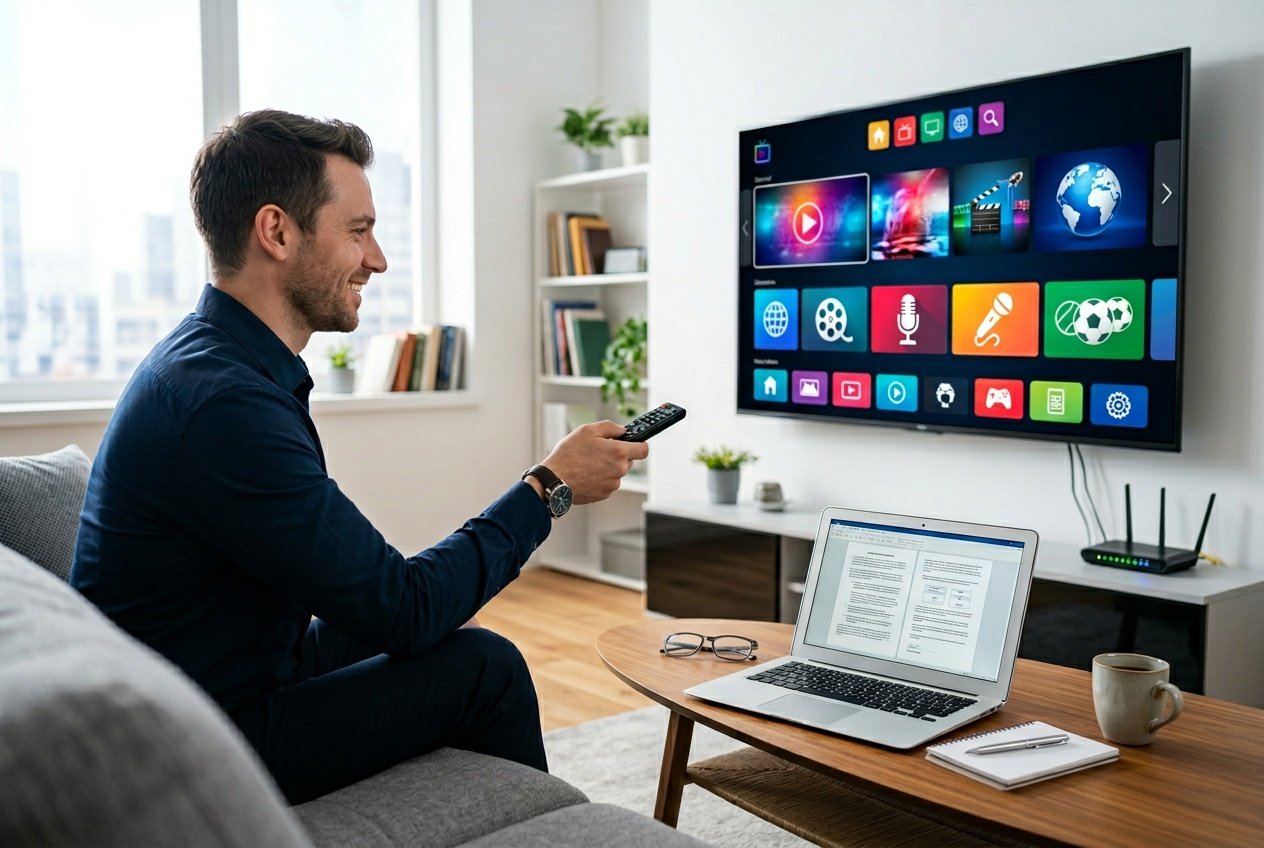
IPTV delivers television content through internet protocols rather than traditional broadcast methods. The technology converts video signals into data packets that travel through broadband networks to reach your streaming device.
Definition of IPTV
IPTV stands for Internet Protocol Television. It’s a system that delivers television programming and video content using the TCP/IP protocol suite instead of traditional terrestrial, satellite, or cable formats.
The technology streams content in real-time or on-demand through your internet connection. You access this content through IPTV apps installed on compatible devices like smart TVs, streaming boxes, or mobile phones.
Unlike downloaded video files, IPTV typically streams content directly to your device. This means you can watch live broadcasts, movies, and series without storing large files on your equipment.
How IPTV Works
IPTV encodes video content into IP packets that transmit through your broadband connection. Your internet service provider routes these packets from the content server to your home network.
When you select a program, the IPTV service sends compressed video data to your device. IPTV players decode these packets and convert them back into watchable video on your screen.
The process requires three main components:
- A content source (broadcast station or streaming library)
- A middleware system that manages user requests
- A client device with decoding software
Your internet bandwidth directly affects stream quality. Higher speeds support better resolution and reduce buffering during playback.
IPTV vs Traditional TV
Traditional television relies on broadcast signals transmitted through cables, satellites, or radio waves. You receive a fixed schedule of channels with limited control over what plays and when.
IPTV gives you more flexibility through on-demand access and time-shifted viewing. You choose what to watch from available content libraries rather than following broadcast schedules.
| Traditional TV | IPTV |
|---|---|
| Fixed broadcast schedule | On-demand content |
| Requires cable/satellite infrastructure | Requires internet connection only |
| Limited interactivity | Interactive features available |
| Same content for all viewers | Personalized content delivery |
Traditional services need physical infrastructure like cable lines or satellite dishes. IPTV eliminates this requirement since it uses your existing internet connection to deliver content.
IPTV Legality Explained

IPTV technology is completely legal, but the legality of any specific service depends entirely on whether it holds proper licenses for the content it streams. The distinction between legal and illegal IPTV comes down to content licensing and copyright compliance.
Is IPTV Legal?
IPTV as a technology is 100% legal. Delivering television content over internet protocol violates no laws in any jurisdiction.
The question “is iptv legal” actually refers to specific IPTV providers and whether they operate with proper authorization. Major services like YouTube TV, Hulu + Live TV, and Sling TV are all IPTV platforms that operate legally because they secure broadcasting rights.
Your legal exposure depends on which provider you choose. Licensed IPTV services operate with full legal protection, while unlicensed services may expose you to copyright infringement issues depending on your country’s enforcement practices.
Legal IPTV vs Illegal IPTV
Legal IPTV services pay content owners for broadcasting rights and maintain licensing agreements with networks and studios. They operate as registered businesses with transparent terms of service and comply with regional content restrictions.
Unlicensed IPTV services stream copyrighted content without authorization or payment to rights holders. These providers typically offer thousands of channels at prices like $5-10 per month, which is economically impossible for licensed content.
You can identify unlicensed services by several red flags: no verifiable business registration, cryptocurrency-only payments, frequent downtime, and pricing that’s too good to be true. Legal services use standard payment processors and maintain consistent uptime with professional customer support.
The Role of Content Licensing
Content licensing is the legal mechanism that determines IPTV legality. Broadcasters and studios own copyrights to their programming and sell distribution rights to IPTV providers through licensing agreements.
These agreements specify which content can be streamed, in which geographic regions, and for what duration. Licensed content carries significant costs, which is why legal IPTV services charge $40-80 monthly for limited channel lineups.
When providers stream unlicensed content, they commit copyright violations. You access pirated streams that deprive content creators of revenue. This creates legal risk for both the provider and potentially for you as the viewer, depending on your jurisdiction’s copyright enforcement policies.
Legal Framework Governing IPTV

The legality of IPTV in the United States hinges on three primary legal frameworks: copyright law protections that govern content distribution, Federal Communications Commission oversight of telecommunications services, and the Digital Millennium Copyright Act’s provisions for online content transmission.
Copyright Laws and IPTV
Copyright law forms the foundation of IPTV legality in the United States. When you stream content through IPTV, copyright protections apply to every movie, TV show, and live broadcast transmitted over the service.
Content creators and distributors hold exclusive rights to their material. Any IPTV service that transmits this content must obtain proper licensing agreements from copyright holders. Without these agreements, the service violates copyright law regardless of how the content is delivered.
The Protecting Lawful Streaming Act (PLSA) specifically targets commercial-scale streaming operations. This law focuses enforcement on service operators rather than individual viewers. However, you can still face civil lawsuits from copyright holders or have your internet service terminated by your ISP for repeated copyright violations.
The distinction between legal and illegal IPTV comes down to licensing. Services that pay for distribution rights operate within copyright law. Services offering “too good to be true” pricing typically lack these licenses and distribute copyrighted material without authorization.
FCC Regulations
The FCC regulates telecommunications infrastructure but does not directly license IPTV content providers. Your IPTV service operates over internet connections, which fall under FCC broadband regulations rather than traditional broadcast television rules.
The FCC ensures internet service providers maintain network neutrality and adequate infrastructure. This affects IPTV delivery quality but does not determine content legality. Licensed IPTV services benefit from FCC-regulated internet infrastructure, while unlicensed services exploit the same networks to distribute unauthorized content.
DMCA and Streaming Laws
The Digital Millennium Copyright Act (DMCA) establishes procedures for addressing online copyright infringement. Copyright holders can issue DMCA takedown notices to remove unauthorized streams, and internet service providers must respond to these notices.
DMCA safe harbor provisions protect legitimate platforms from liability when users upload infringing content, provided the platform responds promptly to takedown requests. IPTV services cannot claim safe harbor protection when their entire business model relies on distributing unlicensed content.
ISPs track DMCA notices sent to your account. Multiple violations can result in service warnings, speed throttling, or complete termination of your internet access. VPN usage does not change the legal status of unlicensed streams or protect you from civil liability.
How to Identify Legal IPTV Services
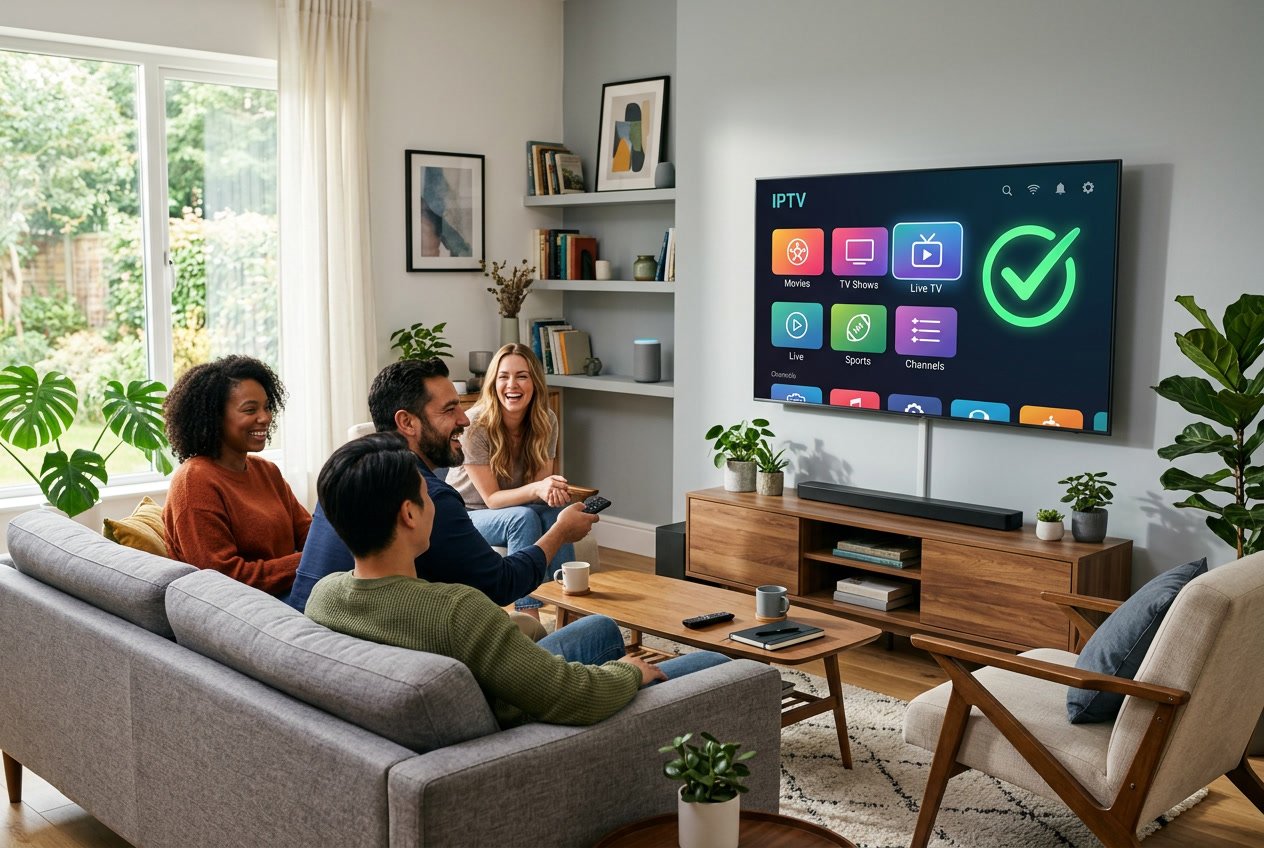
Distinguishing licensed IPTV services from illegal operations requires examining specific business practices, transparency indicators, and warning signs that reveal whether a provider holds proper content rights.
Key Features of Licensed Providers
Legal IPTV providers operate as registered businesses with verifiable corporate information. You can find their physical business address, contact phone numbers, and email support channels on their websites. These verified IPTV providers maintain official apps in major platforms like Google Play, Apple App Store, and Roku Channel Store.
Payment processing offers another clear indicator. Licensed services use reputable payment gateways such as major credit card processors and PayPal. They provide detailed terms of service, privacy policies, and transparent pricing without hidden fees.
Legal IPTV providers display partnerships with content owners through logos and statements in their legal notices or website footers. Their channel lineups align with networks like ABC, NBC, ESPN, and HBO. You’ll find press releases, industry recognition, or mentions in mainstream media when researching these companies.
| Legal Indicator | What to Verify | Why It Matters |
|---|---|---|
| Business Registration | Physical address, phone, email | Confirms accountable legal entity |
| App Store Presence | Google Play, Apple, Amazon, Roku | Shows platform compliance checks |
| Payment Methods | Major credit cards, PayPal | Reduces fraud risk |
| Content Partnerships | Network logos, carriage statements | Proves licensing agreements |
Transparency and Verification
Verified IPTV providers openly list their content sources and distribution rights. You should check if major networks or studios publicly acknowledge the service as a distribution partner. Search for the provider’s name alongside terms like “partnership announcement” or “official distributor.”
Review customer feedback across multiple platforms to assess service reliability. Consistent positive reviews about uptime, billing accuracy, and customer support indicate legitimate operations. Look for how the company responds to complaints or technical issues.
Examine the provider’s channel lineup against official network websites. Licensed services can only offer channels they have agreements with. If a service claims to offer every premium channel at an unusually low price, this raises questions about content rights.
Common Red Flags for Illegal IPTV
Illegal IPTV services typically operate through anonymous domains without verifiable business information. They avoid major app stores and require sideloading or third-party installation methods. Pricing far below market rates—such as hundreds of channels for under $10 monthly—signals unlicensed content distribution.
Unverified IPTV services often use peer-to-peer streaming technology or multiple server locations to evade enforcement. They lack clear terms of service or privacy policies. Payment methods may be limited to cryptocurrency, prepaid cards, or obscure processors that don’t perform due diligence.
Illegal IPTV providers frequently experience sudden service interruptions, domain changes, or complete shutdowns following legal action. They cannot provide proof of content licenses when questioned. Many use misleading marketing claiming “fully loaded” or “all channels worldwide” without explaining legal basis.
If a service requires you to use a VPN, constantly changes URLs, or operates primarily through social media and forums rather than an official website, these are strong indicators of illegal operations. Avoid services that cannot demonstrate clear content rights and business legitimacy.
Popular Legal IPTV Providers in the USA
The legal IPTV market in the USA includes major subscription platforms that offer comprehensive channel lineups and free ad-supported services that provide basic streaming at no cost. Pricing for premium services now averages between $33 and $95 monthly, while free options deliver hundreds of channels without subscription fees.
Major Subscription Services
YouTube TV leads the market at approximately $83 monthly, offering 100+ channels with unlimited cloud DVR storage for nine months. The platform provides comprehensive local network coverage including ABC, CBS, FOX, NBC, and PBS in nearly every US market.
Hulu + Live TV bundles live television with on-demand content at $90 monthly. Your subscription includes access to Disney+ and ESPN+ alongside 95+ live channels, making it one of the strongest value propositions for households that watch both live and on-demand content.
FuboTV targets sports viewers with extensive coverage at $85 monthly for the Pro plan. The service offers multi-view capabilities for watching four games simultaneously and 10 simultaneous home streams, though it currently lacks NBC-owned channels due to a carriage dispute.
Sling TV remains the most affordable option starting at $46 monthly. You can choose between Sling Orange (ESPN, Disney channels) or Sling Blue (news and entertainment networks), though the service does not carry CBS affiliates in any market.
DIRECTV STREAM provides premium pricing starting at $95 monthly but includes regional sports networks in many markets. This makes it the primary option for watching local NBA, MLB, and NHL teams that aren’t available on other streaming platforms.
Philo focuses exclusively on entertainment and lifestyle content at $33 monthly. The service excludes sports and local news but offers 70+ channels with unlimited DVR storage for one full year.
Free Legal Streaming Options
Pluto TV delivers over 250 live channels and thousands of on-demand titles without requiring payment or subscription. The platform includes news, entertainment, sports highlights, and movie channels supported entirely by advertisements.
Tubi offers a massive library of on-demand content alongside live channels. You get access to over 50,000 titles from major studios including Paramount, MGM, and Lionsgate with commercial breaks.
Peacock Free provides NBC content including news, select sports events, and classic TV series at no cost. The free tier offers limited programming compared to paid plans but requires no payment information to access.
The Roku Channel and Xumo both operate as free ad-supported platforms with live channels and on-demand libraries. These services work best as supplements to paid subscriptions rather than complete replacements for traditional cable.
Comparing Legal IPTV Plans
When evaluating legal IPTV services, channel count varies significantly from Philo’s 70+ entertainment-focused networks to DIRECTV STREAM’s 160+ comprehensive lineup. Sports coverage represents the largest differentiator, with FuboTV and DIRECTV STREAM offering the most extensive options including regional sports networks.
DVR capabilities differ substantially across providers. YouTube TV, Hulu + Live TV, FuboTV, DIRECTV STREAM, and Philo all offer unlimited storage, while Sling TV limits recordings to 50 hours on base plans. Philo’s one-year retention period exceeds all competitors.
Simultaneous streams range from Sling TV’s single stream on base plans to FuboTV’s 10 home streams. Most services offer 2-3 concurrent streams, with upgrade options available on platforms like Hulu + Live TV.
The best legal IPTV services for your household depend on specific content priorities. Budget-conscious viewers should consider Philo for entertainment or Sling TV for basic cable channels. Sports fans need FuboTV or DIRECTV STREAM for comprehensive coverage. Families wanting both live TV and extensive on-demand libraries get maximum value from Hulu + Live TV. YouTube TV offers the most balanced package for general viewers who want reliability and comprehensive local channel coverage.
Essential Features and Benefits of Legal IPTV
Legal IPTV services deliver a comprehensive viewing experience through extensive channel lineups, flexible on-demand libraries, reliable streaming performance, and advanced recording capabilities. These features combine to create a modern alternative to traditional cable that prioritizes quality and user control.
Channel Selection
Legal IPTV providers offer diverse channel selection that ranges from 50 to over 200 live channels depending on your subscription plans. You’ll find major broadcast networks, sports channels, news outlets, entertainment programming, and regional content all accessible through a single platform.
Premium IPTV services organize channels into clear categories. This makes navigation simpler whether you’re looking for sports, movies, kids’ programming, or international content. Many providers also offer customizable channel packages so you only pay for what you actually watch.
The channel selection from licensed services includes high-demand content like ESPN, HBO, CNN, and local broadcast affiliates. Some services provide add-on packages for specialized interests like international programming or niche sports leagues.
On-Demand and Catch-Up TV
Your VOD library access typically includes thousands of movies and TV episodes available whenever you want to watch them. Legal services continuously update their on-demand content with new releases and popular titles from major studios and production companies.
Catch-up TV functionality lets you watch recently aired programs you missed, usually for 3 to 7 days after the original broadcast. This feature eliminates the pressure to watch live programming on a fixed schedule.
On-demand content is organized by genre, popularity, and release date. You can search by title, actor, or keyword to quickly find specific programs. Most legal IPTV platforms also provide personalized recommendations based on your viewing history.
Streaming Quality and Device Compatibility
Streaming quality from legal providers delivers consistent HD video, with many services now offering 4K streaming for compatible content and displays. You won’t experience the buffering, pixelation, or sudden quality drops common with unlicensed services.
Device compatibility extends across smart TVs, smartphones, tablets, streaming boxes, and web browsers. Most legal IPTV services support simultaneous streams on 2 to 5 devices, allowing different household members to watch different content at the same time.
Streaming performance remains stable because licensed providers invest in proper infrastructure and content delivery networks. Instant activation means you can start watching immediately after subscribing without technical setup complications.
DVR and Cloud Features
Cloud DVR functionality allows you to record live programming and store it remotely for later viewing. Many legal IPTV services offer unlimited DVR storage or substantial limits like 500 hours, far exceeding traditional cable DVR capacity.
Your recordings remain accessible from any device connected to your account. You can schedule recordings in advance, set up series recordings, and manage your library through intuitive interfaces. Some providers keep recordings available for extended periods, often 9 months or longer.
The cloud-based approach means no physical storage hardware in your home and no risk of losing recordings due to equipment failure. You can pause, rewind, and fast-forward through recorded content just like traditional DVR systems.
Risks of Using Illegal IPTV Services
Illegal IPTV services expose you to legal penalties, security vulnerabilities, and unreliable performance that can compromise both your personal data and viewing experience.
Legal Consequences for Users
While enforcement primarily targets operators of illegal streaming services, individual users still face real legal risks. Your internet service provider can monitor streaming activity and issue warnings for copyright violations under the Digital Millennium Copyright Act.
Repeated violations may result in internet service suspension or termination. Copyright holders can pursue civil lawsuits against users, potentially seeking thousands of dollars in damages per infringement. In rare cases involving commercial use or content redistribution, criminal charges may apply.
The Protecting Lawful Streaming Act of 2020 strengthened enforcement against illegal IPTV operations. As authorities shut down more services, they increasingly collect user data that could be used in future legal actions. Even if you use a virtual private network, your payment information and account details remain vulnerable to discovery through financial investigations.
Security and Privacy Issues
Illegal IPTV applications often contain malware designed to steal personal information or compromise your devices. These services operate outside regulated app stores, bypassing security reviews that protect against malicious code.
Your privacy and security face multiple threats:
- Malware and spyware embedded in streaming apps
- Credit card fraud through unsecured payment systems
- Data theft including login credentials and personal information
- Device hijacking for botnet operations
Many illegal providers require cryptocurrency or gift card payments precisely because they cannot pass standard payment processor security requirements. The apps themselves may request excessive device permissions, giving operators access to your contacts, files, and location data. Unlike legitimate services, illegal IPTV providers have no accountability for data breaches or privacy violations.
Unreliable Streaming Experience
Illegal IPTV services provide inconsistent quality and frequent service interruptions. Streams regularly buffer, freeze, or display in poor resolution because these operations lack proper infrastructure and content delivery networks.
Law enforcement actions shut down illegal services without notice, causing you to lose access immediately with no refund. Channel lineups change unpredictably as providers lose access to sources or get blocked by authorities. Major sporting events and premium content often fail during peak viewing times when servers become overloaded.
Customer support is typically nonexistent or unresponsive. When technical issues arise, you have no recourse for troubleshooting or refunds. The services frequently change domain names, apps, and payment methods to evade detection, forcing you to repeatedly set up new accounts and risk additional payment fraud.
Frequently Asked Questions
Distinguishing legal streaming services from unauthorized ones requires checking specific business credentials and licensing indicators. Viewers face potential legal consequences when using unlicensed services, and payment alone doesn’t legitimize questionable providers.
How can I tell whether a streaming TV subscription is authorized to distribute the channels it offers?
Legitimate streaming services display clear business information including registered company names, physical addresses, and transparent contact methods. You can verify authorization by checking whether the provider uses standard payment processors like major credit cards or PayPal rather than cryptocurrency-only options.
Licensed services maintain professional websites with detailed terms of service, privacy policies, and customer support channels. They openly discuss their partnerships with content providers and networks. If a service claims to offer premium sports packages, movie studios, or broadcast networks at unusually low prices, that’s a strong indicator they lack proper licensing agreements.
You should research the company’s background and look for public information about their content distribution agreements. Authorized providers operate openly because they have legal permission to stream the content they offer.
What are the legal risks for a viewer who uses an unauthorized live TV streaming service?
Using unlicensed streaming services exposes you to copyright infringement liability under federal law. While enforcement historically focused on service providers rather than individual viewers, you could face potential fines ranging from $750 to $30,000 per violation.
Business owners face significantly higher risks. Using unauthorized streaming in commercial spaces like restaurants, gyms, or waiting rooms can result in cease-and-desist letters and substantial penalties from content owners and sports leagues. Copyright holders are becoming more aggressive about pursuing both providers and commercial users.
Beyond legal risks, unauthorized services frequently disappear without notice, taking your prepaid subscriptions with them. You have no legal recourse to recover those payments since the services operate outside legitimate business frameworks.
Do paid streaming TV services become legitimate simply because they charge a monthly fee?
Charging a subscription fee doesn’t make a streaming service legal. Many unlicensed providers charge monthly fees while still distributing copyrighted content without proper licensing agreements.
The key difference lies in whether the service pays licensing fees to content owners, not whether they charge customers. Unlicensed services often price their offerings far below market rates because they skip the expensive step of obtaining distribution rights. Legal services charge higher prices specifically because they’re paying networks, studios, and sports leagues for content rights.
A $5 monthly fee for thousands of channels including premium sports and movies indicates the provider isn’t covering legitimate licensing costs. Those fees would be impossible for a properly licensed service to sustain.
What warning signs suggest a live TV streaming provider may be operating without proper licensing?
Services advertising “all pay-per-view events included” or “every sports package free” are operating without authorization. Legitimate providers cannot offer premium content at drastically reduced prices because licensing agreements don’t allow it.
Payment method requirements reveal much about a service’s legitimacy. Providers demanding cryptocurrency, prepaid cards, or refusing major credit cards typically do so because traditional payment processors won’t work with unlicensed operations. Anonymous business structures, missing physical addresses, and communication only through encrypted messaging apps signal problematic operations.
Technical red flags include channels that frequently disappear or change, inconsistent streaming quality, and sudden service outages. Legal providers maintain stable channel lineups because they have ongoing licensing agreements with content owners.
How do copyright and broadcast rights affect the legality of live TV streams across different countries?
Broadcasting rights are territorial, meaning content licensing applies to specific geographic regions. A channel that’s free-to-air in one country cannot be legally redistributed to viewers in another country without separate licensing agreements for that territory.
International IPTV services must negotiate territory-specific licensing for each region they serve. Services claiming they can legally stream international content simply because it’s free in its home country are misrepresenting copyright law. Redistribution across borders requires explicit permission from content owners for each territory.
You should verify that any international streaming service has proper licensing for your specific location. Geographic restrictions exist because content owners sell broadcasting rights on a regional basis.
What steps should I take if I accidentally subscribed to an unlicensed live TV streaming service?
Cancel your subscription immediately to stop further payments and limit your exposure to potential legal issues. If you paid by credit card, contact your card issuer to dispute the charge and explain you discovered the service operates without proper licensing.
Document all communications with the service including subscription confirmations, payment receipts, and cancellation requests. This documentation protects you if legal questions arise later about your involvement with the service.
Switch to a licensed provider that operates with proper content distribution agreements. Research potential replacements by verifying their business credentials, checking for transparent company information, and confirming they use standard payment processing. Choosing legitimate services from the start protects you from both legal risks and service disruptions.
Table of Contents
IPTV Legal IPTV Legal IPTV Legal IPTV Legal IPTV Legal IPTV Legal IPTV Legal IPTV Legal IPTV Legal IPTV Legal IPTV Legal IPTV Legal IPTV Legal IPTV Legal IPTV Legal IPTV Legal IPTV Legal IPTV Legal IPTV Legal IPTV Legal IPTV Legal IPTV Legal IPTV Legal IPTV Legal IPTV Legal IPTV Legal IPTV Legal IPTV Legal IPTV Legal IPTV Legal IPTV Legal IPTV Legal IPTV Legal IPTV Legal IPTV Legal IPTV Legal IPTV Legal IPTV Legal IPTV Legal IPTV Legal IPTV Legal IPTV Legal IPTV Legal IPTV Legal IPTV Legal IPTV Legal IPTV Legal IPTV Legal