
IPTV USA
IPTV services in the USA deliver live television channels and on-demand content through internet connections rather than traditional cable or satellite systems. These streaming platforms have grown in popularity as Americans seek more flexible and cost-effective alternatives to conventional TV packages. Understanding how IPTV works and what to look for in a provider helps you make informed decisions about your entertainment options.

The best IPTV USA services offer thousands of live channels, reliable HD or 4K streaming quality, multi-device compatibility, and responsive customer support, with pricing typically ranging from $8 to $50 monthly depending on channel count and features. Modern IPTV providers support devices like Amazon Fire Stick, Smart TVs, Android boxes, and mobile phones, giving you the freedom to watch content wherever you prefer. Most services include Electronic Program Guides, video-on-demand libraries, and simultaneous connections for multiple users in your household.
Selecting the right IPTV provider requires evaluating factors like streaming stability, channel availability, device support, and subscription transparency. Testing periods and money-back guarantees allow you to assess performance before committing to longer-term plans. This guide covers essential information about IPTV services available in the USA, including features, compatibility, performance optimization, and important legal considerations.
Key Takeaways
- IPTV USA services provide live TV and on-demand content through internet streaming as an alternative to cable
- Reliable providers offer thousands of channels with HD/4K quality, multi-device support, and minimal buffering
- Choosing the right service involves comparing channel selection, streaming stability, pricing transparency, and legal compliance
Understanding IPTV in the USA

IPTV delivers television content through internet protocols rather than traditional broadcasting methods, transforming how Americans access entertainment. This technology appeals to cord-cutters seeking flexible, internet-based alternatives to cable and satellite services.
What Is IPTV and How Does It Work
Internet Protocol Television transmits TV programming through the same network infrastructure that powers your internet connection. Rather than receiving content through radio waves, satellite signals, or coaxial cables, IPTV streams video data in packets over IP networks.
The process starts when you select content on your device. Your IPTV provider’s server breaks the video into data packets and transmits them through your internet connection. Your device reassembles these packets in real-time, displaying the content on your screen.
IPTV operates in three primary formats: live television (streaming channels as they broadcast), time-shifted media (replaying content from earlier broadcasts), and video on demand (accessing a library of stored content). Most US services combine all three formats.
The technology requires a stable broadband connection. Minimum speeds vary by content quality, but standard definition requires around 3-4 Mbps, HD needs 5-8 Mbps, and 4K content demands 25 Mbps or higher.
Comparison with Traditional Cable and Satellite TV
Cable television uses coaxial cables to deliver bundled channel packages to set-top boxes in your home. Satellite TV transmits signals from orbiting satellites to a dish mounted on your property. Both require specialized hardware and professional installation.
IPTV delivers content through your existing internet connection. You access programming through apps on smart TVs, streaming devices, computers, or smartphones. No satellite dish or cable box is necessary.
Key differences include:
| Feature | Traditional Cable/Satellite | IPTV |
|---|---|---|
| Delivery method | Coaxial cable or satellite signal | Internet connection |
| Equipment | Set-top box required | Works on existing devices |
| Installation | Professional installation | Self-setup |
| Mobility | Fixed location | Watch anywhere with internet |
| Channel selection | Bundled packages | Flexible packages or à la carte |
Traditional services lock you into long-term contracts and require you to pay for channels you don’t watch. IPTV services typically offer month-to-month subscriptions with more targeted channel selections.
Why IPTV Is Growing in Popularity Among US Viewers
Cord-cutters drove IPTV adoption in the USA by seeking alternatives to expensive cable packages. The average cable bill exceeds $100 monthly, while IPTV services start around $40-$70 for comparable channel lineups.
Flexibility attracts subscribers who want to watch content on multiple devices. You can start watching on your living room TV and continue on your tablet or phone without additional fees or equipment.
IPTV providers update their platforms regularly with new features. Cloud DVR functionality, simultaneous streams on multiple devices, and personalized recommendations enhance the viewing experience beyond what traditional providers offer.
The technology integrates naturally with other streaming services. You access IPTV channels alongside Netflix, Disney+, and other apps from a single interface, creating a unified entertainment hub.
Younger viewers prefer internet-based services that align with their existing digital habits. IPTV fits seamlessly into lifestyles already centered around high-speed internet connections and smart devices.
Key Features of IPTV USA Services
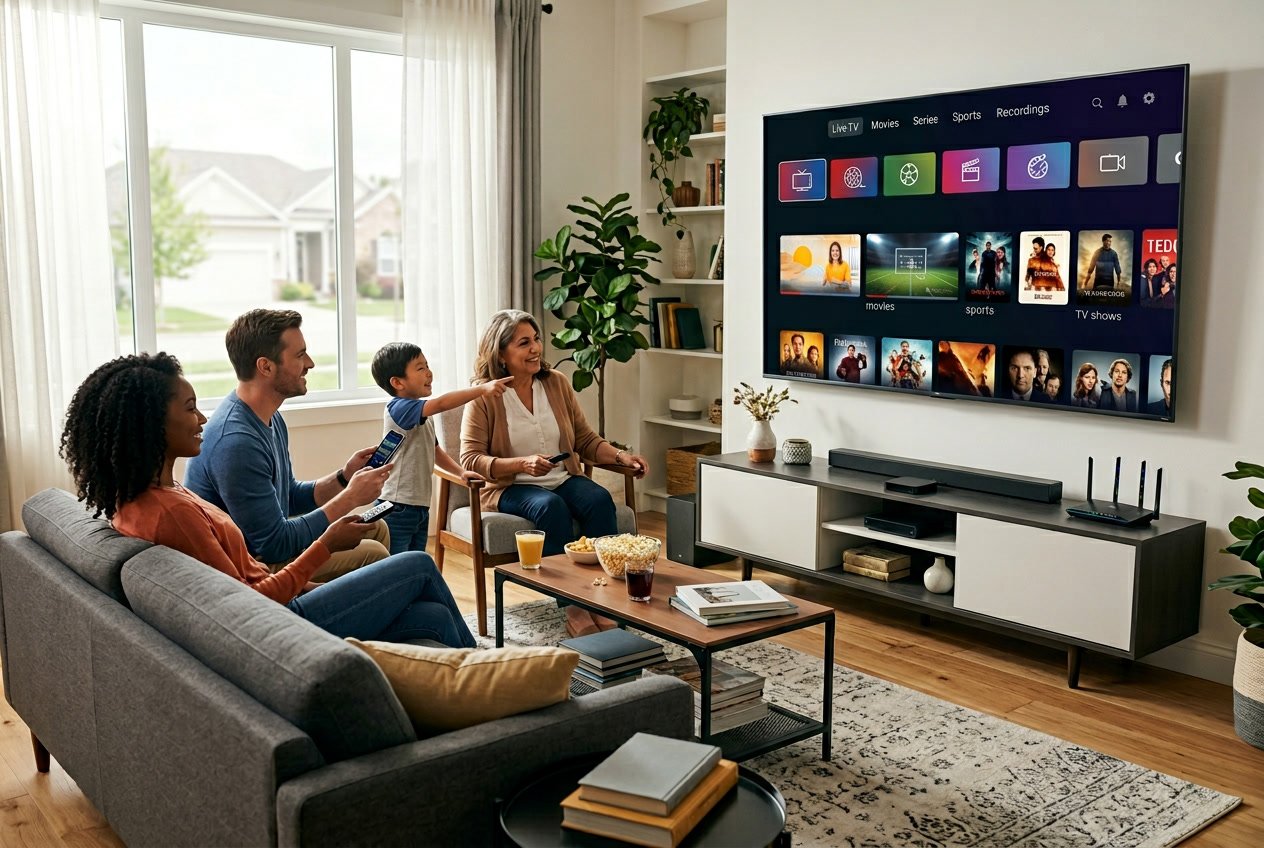
IPTV services in the USA compete on channel selection, streaming performance, and on-demand accessibility. These three features determine whether a service meets your entertainment needs and delivers reliable viewing across devices.
Channel Variety and Content Library
The channel lineup separates basic IPTV services from comprehensive entertainment platforms. Premium providers offer between 10,000 and 20,000 live channels spanning local broadcasts, international programming, sports networks, news outlets, and specialty content. Your access to regional channels depends on the provider’s geographic coverage and licensing agreements.
Content library depth matters as much as channel count. Services that maintain partnerships with multiple content distributors provide broader coverage across entertainment categories. You’ll find providers organizing channels into clear categories: sports, movies, documentaries, kids programming, and international selections by language or region.
Channel variety becomes particularly important if you consume content in multiple languages or follow niche interests. The best services refresh their channel lineup regularly and remove inactive or low-quality streams. Look for providers that specify their channel count by category rather than inflating numbers with duplicate or inactive channels.
Streaming Quality: HD, 4K, and Buffer-Free Experience
High-definition streaming has become the baseline expectation, with leading services now offering 4K streaming for premium content. Your actual streaming quality depends on three factors: the provider’s server infrastructure, your internet connection speed, and the device you’re using.
Adaptive bitrate technology adjusts stream quality based on your available bandwidth. This prevents interruptions when network conditions fluctuate. Services using anti-buffer technology maintain consistent playback during peak usage hours when servers experience higher demand.
Buffer-free streaming requires servers optimized for concurrent users. The most reliable providers report fewer than one buffering event per hour during testing. Your experience improves significantly when providers use content delivery networks that route streams through geographically distributed servers.
Seamless streaming depends on minimum bandwidth thresholds. HD streaming typically requires 10-15 Mbps, while 4K streaming needs 25 Mbps or higher. Providers that prioritize streaming quality invest in redundant server capacity and real-time monitoring to address performance issues quickly.
On-Demand Content and VOD Library
Video on demand libraries complement live channel access by providing time-shifted viewing. VOD titles in comprehensive libraries exceed 100,000 movies and series, though actual availability varies by licensing restrictions and geographic location. Your VOD library should receive daily or weekly updates to include recent releases.
On-demand content eliminates scheduling conflicts and allows you to watch programming at your convenience. The best providers organize their on-demand library with search functions, genre filters, and curated collections. On-demand movies typically appear within days or weeks of their streaming release, depending on the provider’s content agreements.
Your on-demand library value increases when providers include catch-up TV features for live broadcasts. This lets you watch recently aired programming without DVR functionality. Services with robust VOD offerings reduce dependency on live channel schedules and provide flexibility for households with multiple viewers and different preferences.
Choosing the Best IPTV Service Provider

Selecting a reliable IPTV service requires careful evaluation of provider reputation, legal compliance, and pricing transparency. These factors directly impact your viewing experience and protect you from service interruptions or legal complications.
Provider Reputation and Server Stability
Server performance determines whether you experience smooth streaming or constant buffering. Look for IPTV providers that advertise 99.9% uptime and have verifiable track records of consistent service delivery.
Check independent reviews and testing results that document buffering rates and downtime incidents. The most reliable IPTV services maintain dedicated server infrastructure that handles peak traffic without degradation. You should prioritize providers that specify their anti-buffering technology or server redundancy measures.
Test the service during high-traffic periods like major sporting events or prime-time viewing hours. Server stability becomes most apparent when thousands of users stream simultaneously. A provider’s ability to maintain quality during these periods indicates robust infrastructure.
Pay attention to how long the provider has operated and whether they maintain active customer support channels. Established IPTV services typically invest more in server maintenance and upgrades compared to newer operations.
Licensing, Copyright, and Legal Considerations
Many IPTV providers operate without proper licensing agreements for the content they distribute. Using unlicensed services may expose you to legal risks including ISP warnings, service termination, or financial penalties.
Verify whether your chosen provider holds legitimate broadcasting rights for their channel lineup. Licensed services typically cost more but provide legal protection and guaranteed content availability. You should consult legal resources in your jurisdiction to understand local regulations regarding IPTV use.
Copyright compliance affects service reliability beyond legal concerns. Licensed providers maintain more stable relationships with content sources, reducing the risk of sudden channel removals or service shutdowns. Unlicensed operations face takedown notices and may disappear without refunding subscribers.
Free Trials, Pricing, and Money-Back Guarantees
IPTV pricing varies significantly across providers, with monthly plans ranging from $10 to $30 depending on channel count and features. Annual subscriptions often reduce per-month costs by 30-50%.
Request a free trial before committing to any long-term subscription. Legitimate providers offer 24-48 hour trial periods that let you test streaming quality, channel availability, and device compatibility. Avoid services that require full payment without any testing option.
A 30-day money-back guarantee provides essential protection if the service fails to meet your expectations. Verify the refund terms explicitly state full reimbursement rather than partial credits or account extensions. Document any performance issues during your trial period to support refund requests if needed.
Compare total costs including setup fees, device charges, or VPN requirements that some providers mandate. Hidden fees can increase your actual monthly expense significantly beyond the advertised rate.
Device Compatibility and User Experience

Modern IPTV services in the USA support a wide range of devices, from Smart TVs to mobile platforms, while offering varying levels of multi-device streaming and player customization. The quality of your viewing experience depends on choosing compatible hardware and understanding how simultaneous streams work across your household.
Supported Devices and IPTV Apps
Your IPTV service will work across multiple device types, with most providers supporting Smart TVs, Android, iOS, Windows PC, Firestick, Roku, and NVIDIA Shield. Samsung and LG Smart TVs typically include native IPTV apps, while other brands may require external streaming devices. Android devices offer the broadest compatibility due to their open ecosystem, allowing you to install IPTV players like IPTV Smarters, TiviMate, and Perfect Player directly from app stores or third-party sources.
Fire TV Stick 4K remains one of the most popular streaming devices for IPTV in the USA, supporting all major IPTV apps with straightforward installation. MAG devices provide dedicated IPTV functionality with built-in portal support, eliminating the need for third-party players. iOS users face more restrictions due to Apple’s app policies, but you can still access IPTV through approved apps or web-based players.
NVIDIA Shield delivers the highest performance for 4K streaming and handles multiple simultaneous streams without buffering. Windows PC offers the most flexibility for advanced users who want full control over their IPTV setup and player configuration.
Multi-Device Support and Simultaneous Streaming
Most IPTV providers in the USA offer between 1-5 simultaneous streams per subscription, with premium plans supporting up to 10 connections. This multi-device support means different family members can watch separate content on their Smart TV, tablet, and phone at the same time. You need to verify your plan’s connection limits before attempting simultaneous streaming across multiple devices.
Multi-device compatibility extends beyond just watching—you can start content on your Fire TV Stick 4K in the living room and resume on your iOS device in another room. Some providers restrict simultaneous streams to the same IP address, while others allow connections from different locations. This distinction matters if you plan to share your subscription with family members in different households.
User Interface and IPTV Player Options
IPTV Smarters dominates as the most widely-used IPTV player in the USA, offering customizable channel lists, EPG integration, and DVR functionality. The player you choose directly impacts your user experience, with options ranging from simple interfaces for beginners to advanced players with recording capabilities.
TiviMate provides superior EPG layouts and smooth channel switching, making it the preferred choice for users who prioritize interface design. Your Smart TV’s built-in IPTV apps typically offer simpler navigation but lack the customization options found in dedicated IPTV players. Roku users face more limited player options due to platform restrictions, though workarounds exist through screen mirroring.
The quality of your user experience depends on choosing an IPTV player that matches your technical skill level and device capabilities. Android users have access to the widest selection of IPTV apps, while iOS and Roku users must work within more constrained ecosystems.
Popular IPTV USA Providers and Subscription Options
Several IPTV providers have established strong reputations in the USA market through consistent performance, extensive channel offerings, and flexible pricing. The most sought-after services typically offer thousands of live channels, dedicated sports content, and regular updates to keep programming current.
Top-Rated and Best IPTV Services for 2026
DigitaLizard IPTV leads current rankings with over 12,000 live channels and 80,000 on-demand titles, supporting streaming quality up to 8K UHD. The service maintains 99.9% uptime and offers anti-freeze technology. Pricing starts at $8 monthly for single connections, with a 24-hour trial available.
iScreenHD IPTV provides 35,000+ channels with strong coverage of premium USA networks including ESPN, HBO, Showtime, and major broadcast networks. Monthly subscriptions begin at $14.99, and the service includes a 36-hour trial period.
USA LIVE IPTV features 20,000+ live channels and 136,000 on-demand titles with a 30-day money-back guarantee. Other notable providers include Plevo IPTV, Krooz TV, Kemo IPTV, and Nomad IPTV, each offering distinct channel counts and trial periods ranging from 24 to 48 hours.
Comparing Channel Lineups and Content Updates
Channel counts vary significantly across providers, from 4,000 to over 40,000 live streams. Services like Xtreme HD IPTV and Beast IPTV 4K advertise 40,000+ channels, while focused alternatives like EagleCast TV maintain smaller curations of approximately 4,000 channels.
Most premium IPTV services update their VOD libraries weekly with new movie releases and series episodes. DigitaLizard specifically includes current titles such as Dune 2, House of Dragons, and Wicked alongside classic series like Breaking Bad and Friends. The quality of Electronic Program Guides (EPG) affects how easily you can navigate these extensive libraries and schedule viewing.
Multi-device compatibility is standard, with most providers supporting Amazon FireStick, Smart TVs, Android devices, iOS platforms, and Windows/Mac computers.
Premium IPTV and Sports Streaming Options
Premium IPTV packages prioritize sports streaming with dedicated channels for NFL, UFC, NBA, MLB, and NHL coverage. iScreenHD delivers comprehensive access to Fox Sports, NBC Sports, and CBS Sports alongside ESPN networks without additional fees.
PPV events represent a key differentiator among providers. USA LIVE IPTV offers access to boxing and UFC PPV matches, while DigitaLizard maintains stable streams during high-demand live events. Testing confirms that providers with dedicated sports infrastructure experience fewer interruptions during peak viewing hours.
Sports-focused subscriptions typically require higher bandwidth, with HD streams needing at least 10 Mbps and 4K content requiring 25 Mbps or more. Connection stability matters more than raw speed for live TV, particularly during real-time sporting events where buffering disrupts the viewing experience.
Optimizing Streaming Performance and Reliability
Quality IPTV streaming requires more than just a fast internet connection. Server infrastructure, network configuration, and provider-level technologies all determine whether you experience smooth playback or constant interruptions.
Anti-Buffering and Anti-Freeze Technologies
Modern IPTV providers implement specific technologies to minimize buffering and freezing during playback. Anti-freeze technology uses adaptive bitrate streaming, which automatically adjusts video quality based on your current network conditions to maintain continuous playback. Anti-buffering technology pre-loads content segments ahead of your current viewing position, creating a buffer zone that absorbs temporary network fluctuations.
Premium IPTV USA services deploy these features at the server level, not just through apps. This means the technology works regardless of which device you use.
Key technical features include:
- Dynamic stream switching during bandwidth drops
- Multi-server redundancy for instant failover
- Content pre-caching for popular channels
- Packet loss recovery protocols
These technologies work together to maintain streaming stability even when your connection experiences brief slowdowns. Services without these features typically freeze or buffer whenever network conditions change, creating a frustrating viewing experience.
Internet Speed and ISP Throttling
Your actual streaming performance depends on both raw bandwidth and connection consistency. While HD streaming technically requires 10-15 Mbps, having 200 Mbps fiber doesn’t guarantee perfect IPTV performance if your ISP throttles streaming traffic.
ISP throttling occurs when internet providers intentionally slow specific types of traffic, including video streaming. Some ISPs detect IPTV streams and reduce bandwidth during peak hours. You can identify throttling by testing speeds at different times—if your connection drops significantly during evenings but performs well at 3 AM, throttling is likely occurring.
Solutions for ISP throttling:
- Use VPN services to encrypt traffic patterns
- Schedule speed tests during typical viewing hours
- Contact your ISP about consistent streaming policies
- Consider switching providers if throttling persists
Connection stability matters more than peak speed. A consistent 25 Mbps connection outperforms an unstable 100 Mbps connection for IPTV streaming. Wired Ethernet connections provide better stability than Wi-Fi, especially for 4K content.
Server Uptime and Content Delivery
Server performance directly impacts your streaming experience regardless of your home network quality. Reliable IPTV providers maintain 99%+ uptime through redundant server infrastructure and strategic content delivery networks.
Quality providers distribute servers across multiple geographic locations, reducing latency and ensuring backup availability. When one server experiences issues, your stream automatically redirects to another without interruption. Poor providers rely on single-server setups that create widespread outages when problems occur.
Server infrastructure indicators:
| Factor | Quality Provider | Budget Provider |
|---|---|---|
| Uptime guarantee | 99%+ | 90-95% |
| Server locations | Multiple regions | Single location |
| Load balancing | Automatic | Manual or none |
| Peak hour performance | Stable | Degrades |
Testing server performance during free trials reveals real-world reliability. Stream content during evening hours (7-10 PM) when servers face maximum load. Switch between channels frequently and test on multiple devices simultaneously to evaluate how infrastructure handles concurrent connections.
Legal & Security Considerations for IPTV Users
IPTV legality in the USA hinges on whether services hold proper content licenses, and using unlicensed providers exposes you to service disruptions, security vulnerabilities, and potential legal complications.
Understanding Legal IPTV vs Unverified Services
Legal IPTV providers operate with content distribution agreements from copyright holders. These services pay licensing fees to broadcasters and studios, allowing them to legally stream channels and programs to subscribers.
Licensed providers include established platforms like Hulu Live TV, YouTube TV, and Sling TV, alongside specialized services that maintain proper authorization. These services openly discuss their licensing status and operate with transparent business identities.
Unverified services typically lack these agreements and stream content without authorization. You can identify them through several warning signs: extremely low pricing (under $5-8 monthly), payment only through gift cards or cryptocurrency, missing business registration information, and vague or absent licensing claims.
Key Differences:
| Legal IPTV Services | Unlicensed Services |
|---|---|
| Hold content licenses | No licensing agreements |
| Official app distribution | APK sideloading required |
| Transparent pricing | Suspiciously cheap rates |
| Verifiable business identity | Anonymous operations |
| Customer support available | Limited or no support |
Copyright, Licensing, and Staying Safe Online
The Copyright Act of 1976 and the Digital Millennium Copyright Act (DMCA) govern IPTV content distribution in the United States. Television programming carries copyright protection, meaning distribution requires authorization from content owners.
Licensed IPTV services obtain these rights through agreements with broadcasters and studios. Your subscription fees support these licensing costs, which is why legitimate services charge rates that reflect actual content expenses.
When you choose a licensed provider, you receive content through a legal distribution chain. This protects you from service interruptions due to enforcement actions and ensures your streaming activity complies with copyright law.
The Federal Communications Commission also regulates certain broadcast standards and consumer protection aspects of IPTV services, including billing practices and service transparency.
Risks of Using Unlicensed Providers
Unlicensed IPTV services create multiple risks beyond legal concerns. Service stability represents the most immediate problem—enforcement actions regularly shut down unauthorized providers, causing subscribers to lose access without refunds or warning.
Security threats are substantial. Unlicensed services often distribute apps outside official channels, potentially containing malware or spyware. These providers may collect payment information without proper security measures, exposing you to fraud and identity theft.
Law enforcement agencies have increased prosecution of unlicensed IPTV operators. The Department of Justice has secured prison sentences for major operators, and content companies have won multi-million dollar civil judgments. While individual subscriber prosecution remains rare, using these services means supporting operations that face active legal action.
Your viewing experience suffers as well. Unlicensed services lack incentive to invest in infrastructure, resulting in poor stream quality, frequent buffering, and minimal customer support when technical issues arise.
Frequently Asked Questions
Selecting and managing a streaming service involves technical requirements, content choices, and understanding legal frameworks. These answers address the most common concerns about equipment, performance, troubleshooting, and compliance.
How can I choose a reliable streaming provider with consistent uptime and minimal buffering?
Start by researching independent reviews and user feedback across multiple platforms. Look for providers that offer trial periods or money-back guarantees so you can test their service during peak hours.
Check if the provider maintains multiple server locations. Geographic server distribution helps reduce latency and provides backup options if one server experiences issues.
Examine the provider’s customer support availability. Services with 24/7 support through live chat or ticketing systems demonstrate a commitment to resolving issues quickly.
Verify that the provider has been operating for at least one year. Established services with consistent operations are more likely to maintain reliable infrastructure than newly launched platforms.
Test the service at different times throughout the day. Stream quality can vary during evening hours when bandwidth demand peaks across networks.
What internet speed and home network setup are recommended for smooth live TV streaming?
You need at least 10 Mbps for HD content on a single device. For 4K streaming, aim for 25 Mbps or higher per stream.
Multiple simultaneous streams require additional bandwidth. Add 10 Mbps for each additional HD stream you plan to run concurrently in your household.
Use a wired Ethernet connection to your primary viewing device when possible. Ethernet connections provide more stable speeds than Wi-Fi and reduce buffering incidents.
Position your router centrally if you must use Wi-Fi. Walls, floors, and electronic devices can interfere with wireless signals and degrade streaming quality.
Consider upgrading to a dual-band or tri-band router if you have an older model. Modern routers handle multiple device connections more efficiently and reduce network congestion.
Check your ISP for data caps. Streaming live TV can consume 2-3 GB per hour for HD content and 7 GB or more for 4K, which may exceed monthly limits on some plans.
Which devices and apps are compatible with common playlist formats and electronic program guides?
M3U playlist formats work across most streaming devices and applications. Fire TV Stick, Android TV boxes, and smartphones all support apps that read M3U URLs.
TiviMate and IPTV Smarters Pro are popular applications for Android-based devices. Both support electronic program guides and allow you to organize channels into custom groups.
Smart TVs from Samsung, LG, and Sony can run dedicated apps from legitimate providers. Some third-party apps may require sideloading, which varies by manufacturer.
Apple devices work with specialized apps available through the App Store. Perfect Player IPTV and GSE Smart IPTV support M3U playlists on iOS devices.
Windows and Mac computers can use VLC Media Player to open M3U files directly. Dedicated applications like MyIPTV Player provide additional features like recording and EPG integration.
EPG compatibility depends on both your provider and chosen app. Most services supply an EPG URL that you enter into your app’s settings to display program information and schedules.
How do channel lineups, local stations, and sports availability typically vary between services?
Local broadcast channels depend on your geographic location and provider licensing. Some services offer local ABC, CBS, NBC, and FOX affiliates, while others provide only national feeds.
Sports package availability varies significantly between providers. Major league coverage often requires premium add-ons or specialized sports-focused services with official broadcasting rights.
Regional sports networks present the most variation. Your access to local team broadcasts depends on territorial restrictions and whether the provider has agreements with regional network operators.
International channel selection differs based on provider focus. Services targeting specific communities may offer extensive foreign language programming that general providers lack.
Premium cable channels like HBO or Showtime are not included in basic packages. You typically need higher-tier subscriptions or separate add-ons to access this content.
Channel counts can be misleading. A provider advertising 10,000 channels may include numerous regional variants, foreign language stations, or low-quality feeds that inflate the total.
What are the key legal and compliance considerations to understand before subscribing to a TV streaming service?
Legal services maintain proper licensing agreements with content owners and distributors. Legitimate providers openly display their business registration, terms of service, and content licensing information.
Pricing that seems too good to be true often indicates unlicensed content. Services offering thousands of premium channels for $10-20 monthly likely lack proper broadcasting rights.
Accepting cryptocurrency only or refusing to provide business contact information are warning signs. Legitimate businesses offer standard payment methods and display physical business addresses.
You bear legal responsibility for the services you use. Courts have held subscribers accountable for accessing pirated content, even when they claim ignorance about licensing status.
Copyright infringement notices from your ISP indicate problematic activity. If you receive such notices, discontinue the service immediately and switch to a licensed provider.
Legitimate providers like established streaming platforms operate within legal frameworks. These services may cost more but protect you from potential legal consequences and service disruptions.
How can I troubleshoot common issues like freezing, login errors, or playlists not loading?
Test your internet speed first when experiencing buffering or freezing. Run multiple speed tests at different times to identify if your connection meets the required bandwidth.
Clear your app’s cache and data if login errors persist. Navigate to your device settings, find the app, and select options to clear stored information before attempting to log in again.
Verify your playlist URL is correct and hasn’t expired. Some providers issue time-limited URLs that require renewal, while typos in manual entry can prevent playlists from loading.
Restart your streaming device and router when experiencing persistent issues. Power cycling both devices resolves temporary network conflicts and memory problems that affect performance.
Switch servers if your provider offers multiple options. Server overload during peak hours can cause freezing, and connecting to an alternate server may restore smooth playback.
Check for app and device firmware updates. Outdated software versions can cause compatibility issues that prevent proper streaming functionality.
Contact your provider’s support team if problems continue after basic troubleshooting. They can check server status, verify your account credentials, and identify issues specific to their service.
Table of Contents
IPTV USA IPTV USA IPTV USA IPTV USA IPTV USA IPTV USA IPTV USA IPTV USA IPTV USA IPTV USA IPTV USA IPTV USA IPTV USA IPTV USA IPTV USA IPTV USA IPTV USA IPTV USA IPTV USA IPTV USA IPTV USA IPTV USA IPTV USA IPTV USA IPTV USA IPTV USA IPTV USA IPTV USA IPTV USA IPTV USA IPTV USA IPTV USA IPTV USA IPTV USA IPTV USA IPTV USA IPTV USA IPTV USA IPTV USA IPTV USA IPTV USA IPTV USA IPTV USA IPTV USA IPTV USA IPTV USA IPTV USA IPTV USA IPTV USA IPTV USA IPTV USA IPTV USA IPTV USA IPTV USA IPTV USA IPTV USA IPTV USA IPTV USA IPTV USA IPTV USA IPTV USA IPTV USA IPTV USA IPTV USA IPTV USA IPTV USA IPTV USA IPTV USA IPTV USA IPTV USA