
Best IPTV Services
IPTV has transformed how people watch television by delivering live channels, on-demand content, and sports through internet connections rather than traditional cable or satellite systems. With rising cable costs and limited flexibility, more viewers are switching to IPTV services that offer thousands of channels at a fraction of the price. The challenge is finding a provider that delivers reliable streaming, quality customer support, and transparent pricing.

The best IPTV services in 2026 include Layerseven TV for overall performance, StreamHut for sports coverage, and IPTV US for budget-conscious viewers, each offering extensive channel lineups with 20,000 to 30,000 live channels and substantial video-on-demand libraries. These providers have been tested for streaming quality, device compatibility, and customer service to ensure they meet real-world viewing needs. Your choice will depend on your specific requirements, whether that’s international channels, sports packages, or family entertainment.
Understanding what separates legitimate IPTV providers from unreliable options helps you make an informed decision. This guide covers everything you need to know about selecting an IPTV service, from essential features and pricing structures to setup processes and legal considerations.
Key Takeaways
- IPTV services offer thousands of live channels and on-demand content at lower costs than traditional cable subscriptions
- Top providers like Layerseven TV and StreamHut deliver reliable streaming with minimal buffering and strong customer support
- Choosing the right IPTV service requires evaluating channel selection, device compatibility, trial options, and subscription pricing
What Is Best IPTV Services?

IPTV delivers television content through internet protocol networks rather than traditional cable or satellite formats. This technology enables you to stream live TV channels and video-on-demand content directly to your devices using your internet connection.
Types of IPTV Services
IPTV services fall into three main categories based on how they deliver content to your screen.
Live television streams broadcast channels in real-time, similar to traditional TV but delivered over the internet. You can watch news, sports, and other programming as it airs.
Video-on-demand (VOD) libraries let you select and watch content whenever you want. This includes movies, TV series, and documentaries stored on the provider’s servers.
Time-shifted media allows you to watch previously aired programs. This includes catch-up TV services where you can view shows that aired in the past few days, and start-over features that let you restart a live program from the beginning.
Some IPTV streaming providers offer all three types in a single package, while others specialize in specific categories.
How IPTV Works
Your IPTV service converts television signals into small data packets that travel across internet networks. When you select a channel or video, the content streams from the provider’s server to your device through your internet connection.
The system requires a stable broadband connection to maintain quality. Your device receives and decodes these data packets, reassembling them into the video and audio you see on screen.
Most services use adaptive streaming technology that adjusts video quality based on your internet speed. This prevents buffering and ensures smooth playback even when bandwidth fluctuates.
Key IPTV Terminology
Understanding basic IPTV terms helps you evaluate different services and troubleshoot issues.
Bandwidth measures the amount of data your connection can handle per second. Higher bandwidth supports better video quality and multiple simultaneous streams.
Buffering occurs when your device temporarily stores content data before playing it. Excessive buffering indicates connection issues or server problems.
Middleware refers to the software interface that displays your channel guide and content library. The best IPTV providers use intuitive middleware that makes navigation simple.
EPG (Electronic Program Guide) shows you what’s currently playing and upcoming schedules for live TV channels. Quality EPGs include detailed program information and allow you to set reminders or recordings.
Codecs are technologies that compress and decompress video files. Common IPTV codecs include H.264 and H.265, with newer codecs providing better quality at lower file sizes.
How To Choose the Best IPTV Service
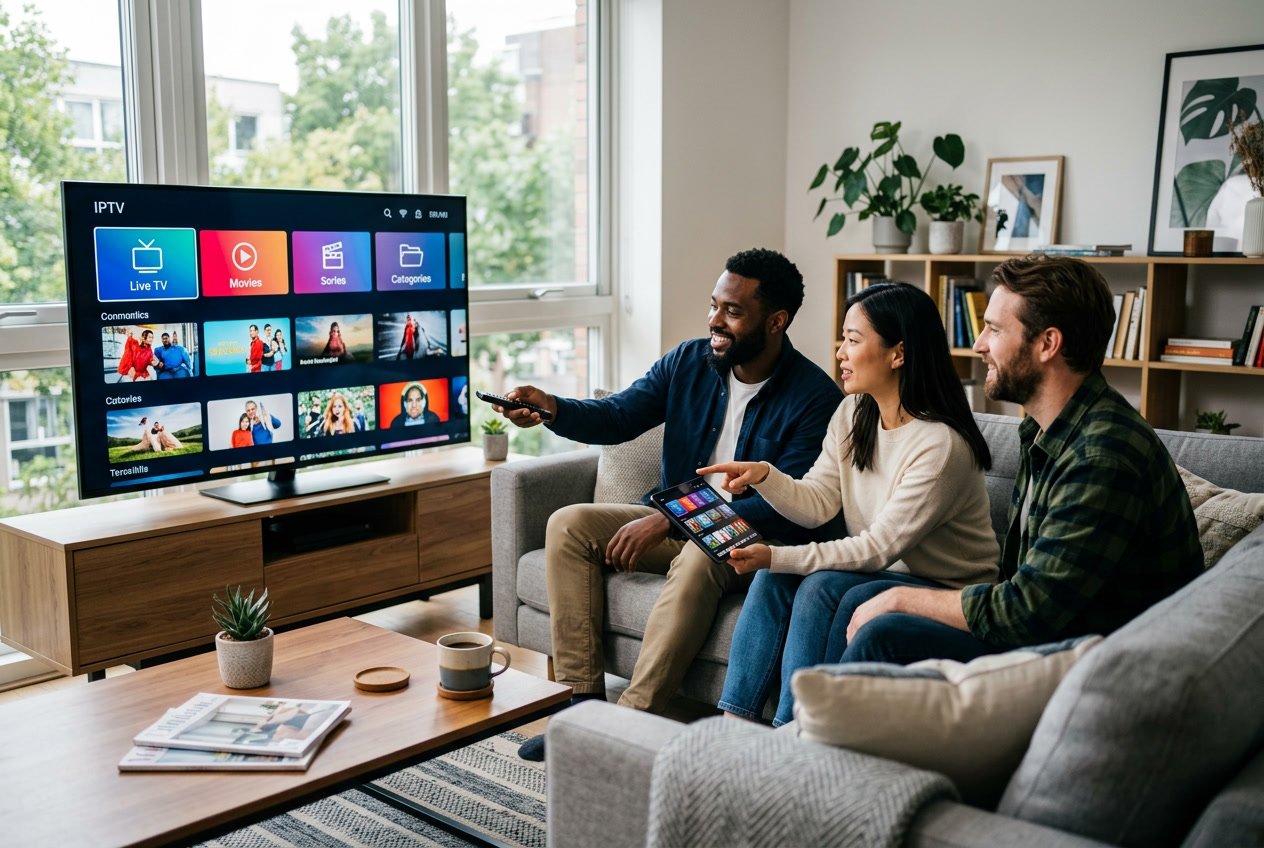
Selecting the right IPTV provider requires evaluating three critical factors: whether the service operates legally with proper licensing, the breadth and quality of available channels and content, and the technical reliability of streaming performance.
Legality and Licensing
The distinction between legal IPTV and unlicensed IPTV determines both your legal exposure and service quality. Legal IPTV services acquire proper broadcasting rights and licensing agreements from content owners, while unverified IPTV services operate without authorization.
Legal IPTV providers typically charge higher subscription fees because they pay for content licensing. These services face less risk of sudden shutdowns and provide legitimate customer support. Unlicensed IPTV often advertises thousands of premium channels at suspiciously low prices, which should raise immediate concerns.
You can verify legitimacy by checking whether a provider lists their business registration, displays clear terms of service, and maintains transparent contact information. Many unlicensed services hide behind anonymous domains and cryptocurrency-only payment methods. Using unlicensed IPTV can result in legal consequences in some jurisdictions, and your internet service provider may monitor or throttle suspicious streaming activity.
Content Selection and Channel Lineup
Your ideal IPTV provider must offer the specific channels and content categories you actually watch. Premium channels like HBO, Showtime, and specialty networks vary significantly between providers, as do regional channels that serve specific geographic areas.
International channels become critical if you want content in languages beyond English or from specific countries. Sports coverage represents another major differentiation point—some services include comprehensive access to live sports, while others provide limited options.
Create a list of your 10-15 most-watched channels before comparing providers. Verify that advertised channel counts reflect accessible, working streams rather than inflated numbers with duplicate or dead links. Many IPTV providers list 20,000+ channels, but actual usable content often represents a fraction of that total.
Streaming Quality and Stability
HD streaming should be the baseline expectation, with 4K streaming becoming standard for premium services. Some providers now offer 8K streaming for select content, though this requires compatible devices and sufficient bandwidth.
Server performance directly impacts your viewing experience. Look for providers advertising 99.9% uptime or 99.99% uptime, which indicates reliable infrastructure. Buffer-free streaming depends on anti-freeze technology and anti-freeze servers that maintain connection stability.
Critical performance indicators:
- Stream resolution consistency during peak viewing hours
- Recovery time when buffering occurs
- Multi-device streaming capability without quality degradation
ISP throttling can affect IPTV performance regardless of provider quality. Test streaming during evening hours when network congestion peaks. Services with distributed server networks typically handle high-traffic periods better than single-server operations.
Top IPTV Service Providers in 2026

The IPTV market in 2026 offers providers with channel counts exceeding 40,000, uptime rates near 99%, and pricing that undercuts traditional cable by 70% or more. Providers now compete on sports coverage, VOD libraries, international programming, and device compatibility rather than channel numbers alone.
Best Overall IPTV Providers
SonixIPTV leads the market with 45,000+ channels, 140,000+ VOD titles, and 99.7% uptime. The service includes premium sports packages like NFL Sunday Ticket and NBA League Pass at no extra cost. You get 4K streaming support, anti-buffering technology, and compatibility with Fire Stick, Apple TV, Android TV, and smart TVs.
IPTVGeeks ranks as another top choice with 28,000+ channels and advanced features like 7-day replay and custom playlist creation. You receive three simultaneous connections on standard plans, making it suitable for households with multiple viewers. The service supports API integration for power users who want to customize their experience.
PioneersTV delivers 35,000+ channels and 80,000+ VOD titles with 98.9% uptime at a competitive price point. The provider offers strong international coverage across Europe, Asia, and North America with daily content updates.
Budget and Affordable IPTV Options
PioneersTV provides the best value with annual pricing significantly below premium competitors while maintaining extensive channel variety. You access over 35,000 channels and consistent streaming quality without paying for features you might not use.
KickIPTV targets budget-conscious viewers with 25,000 channels focused on core programming. The service costs less than premium options but delivers 97.8% uptime and basic streaming features. You won’t get extensive 4K content or advanced features, but the pricing makes it accessible for casual viewers.
Sling TV and YouTube TV represent budget-friendly legal alternatives with transparent pricing starting around $40-$73 monthly. These services offer fewer channels but include cloud DVR, authenticated apps, and straightforward cancellation policies.
IPTV for Sports and Premium Content
SonixIPTV dominates sports coverage with complete access to UFC PPV events, boxing matches, international football leagues, and regional sports networks. You get all premium sports content included in your subscription without per-event fees. The service streams major sporting events in 1080p or 4K with minimal buffering during peak viewing times.
KickIPTV focuses specifically on sports with dedicated channels for NFL, NBA, NHL, MLB, and global soccer leagues. Your subscription includes most regular season games, though some PPV events require additional payment. The service delivers reliable streams for everyday sports viewing at budget pricing.
Apollo Group TV offers strong sports coverage with emphasis on North American leagues and international football. You access multiple feeds for popular games and receive consistent stream quality during live events.
IPTV With Extensive International Coverage
SonixIPTV provides channels from 120+ countries with strong representation across Europe, Asia, the Middle East, and Latin America. You access regional news, sports, entertainment, and cultural programming in multiple languages. The service updates international content daily and includes both mainstream and niche channels.
PioneersTV excels in European and Middle Eastern coverage with thousands of channels in Arabic, French, German, Spanish, and other languages. Your subscription includes popular international sports leagues and regional VOD content that updates regularly.
IPTVService.net offers 32,000+ channels with balanced international coverage across major regions. You get access to immigrant communities’ preferred channels alongside standard programming, making it suitable for multilingual households.
Essential IPTV Features to Consider

Quality IPTV services distinguish themselves through specific technical capabilities and content offerings. The right combination of device support, content library depth, program navigation tools, and streaming flexibility determines whether a service meets your viewing requirements.
Device Compatibility and Supported Apps
Device compatibility determines where and how you can access your IPTV subscription. Most providers support Android TV, Amazon Fire TV, and Apple TV, while compatibility with Smart TVs and Roku varies significantly between services.
Popular IPTV apps like IPTV Smarters Pro and TiViMate work with services that provide Xtream Codes API support or M3U playlist URLs. These apps offer advanced features including catch-up TV, parental controls, and customizable interfaces.
Check whether your provider supports your specific devices before subscribing. Some services limit certain features to particular platforms, so verify that core functionality works on your primary viewing device. Mobile device support for iOS and Android extends your viewing options beyond the living room.
Video-on-Demand Library and Content Variety
VOD libraries separate basic IPTV services from comprehensive entertainment platforms. Strong providers maintain extensive catalogs of on-demand movies, TV series, and specialty programming that you can watch anytime.
The size of VOD libraries ranges from a few hundred titles to tens of thousands of on-demand titles. Premium services update their collections regularly with recent releases and maintain organized categories for easy browsing.
Content variety matters as much as quantity. Look for services that cover multiple genres, languages, and international programming if those match your interests. Some providers specialize in specific content types like sports archives or classic films, while others aim for broad appeal across all categories.
Electronic Program Guide and EPG Support
A functional EPG (Electronic Program Guide) transforms IPTV from a basic stream into a structured TV experience. Quality electronic program guides display accurate channel schedules, show descriptions, and programming information up to seven days in advance.
EPG reliability varies considerably between providers. The best services maintain synchronized guides that update automatically and display correct timing across all channels. Poor EPG implementation results in missing information, incorrect schedules, or complete guide failures.
Advanced EPG features include search functions, genre filtering, and the ability to set reminders or schedule recordings. Apps like IPTV Smarters and TiViMate enhance basic EPG data with additional sorting and display options when paired with services that provide complete guide information.
Simultaneous Streams and Multi-Device Access
Simultaneous streams determine how many devices can use your IPTV subscription at the same time. Most services offer between one and five concurrent connections, with pricing tiers often based on the number of streams included.
Multi-device streaming capabilities matter for households where multiple people want to watch different content simultaneously. A single-stream subscription forces everyone to coordinate viewing times, while multi-stream plans eliminate conflicts.
Consider your household’s actual viewing patterns when selecting a plan. Two or three simultaneous streams typically satisfy most families, while single-user accounts need only one connection. Some providers charge significantly more for additional streams, so compare the cost difference against your actual requirements.
Subscription Plans, Trials, and Pricing
IPTV pricing varies significantly across providers, with options ranging from budget IPTV services under $15 monthly to premium IPTV packages exceeding $40. Most services offer instant activation and include free trials or money-back guarantees to let you test streaming quality before committing.
Subscription Options and Packages
IPTV subscription plans typically come in monthly, quarterly, and annual packages. Monthly plans start around $11-$20 for budget IPTV options with basic channel lineups, while premium IPTV services charging $40+ often include more features and higher simultaneous connections.
Annual subscriptions provide better value, with some providers offering 12-15 months of service for $80-$100. You’ll find plans priced at $14.99 for one month, $29.99 for three months, or $69.99 for a full year. Many services include multiple connections per subscription, allowing you to stream on 2-3 devices simultaneously.
Affordable IPTV providers often charge £11.99 or $15.99 monthly while delivering 18,000+ channels and extensive VOD libraries. Premium packages may cost more but typically include additional features like anti-freeze technology and priority support. Most services accept credit cards, debit cards, and cryptocurrency payments.
Free Trials and Money-Back Guarantees
Free trials range from 24 hours to 3 days, with some providers charging $2.99 for a 36-hour trial period. These trials give you access to full channel lineups and streaming features before purchasing a subscription.
A 24-hour free trial lets you test streaming quality, interface navigation, and channel availability. Some services extend this to 3-day trials with instant activation, requiring no payment upfront.
Money-back guarantees typically cover 3 days after purchase. If you experience buffering, limited channels, or technical issues, you can request a refund within this window. This protection works alongside free trials to minimize financial risk when testing new providers.
Cloud DVR and DVR Functionality
Cloud DVR storage allows you to record live programming and watch it later without physical hardware. Not all IPTV services include this feature, so verify availability before subscribing.
DVR functionality varies by provider. Some offer unlimited cloud DVR storage, while others limit recordings to specific hours or file counts. Services with catch-up channels provide 24-48 hours of previously aired content, which serves as an alternative to traditional DVR.
Cloud DVR typically requires a higher-tier subscription plan. If recording live sports or shows matters to you, confirm storage limits and retention periods during your free trial.
Safety, Legality, and Responsible IPTV Usage
Using IPTV services requires understanding the difference between licensed and unlicensed providers, as well as knowing how to protect your connection and data. Unlicensed services carry legal risks and security vulnerabilities, while proper streaming practices help you avoid throttling and other issues.
Risks of Unlicensed IPTV
Unlicensed IPTV services operate without proper broadcasting rights or content licenses. These unverified IPTV services may seem attractive due to low prices, but they expose you to serious consequences.
Legal risks include potential copyright infringement claims and fines. While enforcement varies by jurisdiction, streaming unlicensed content can result in warnings from your internet service provider or legal action from content owners.
Security threats are equally concerning. Unlicensed providers often lack proper encryption and may harvest your personal data. Some services bundle malware with their applications or use your bandwidth for illegal activities without your knowledge.
Service reliability suffers with unlicensed options. These providers frequently shut down without notice, experience constant buffering, or provide poor video quality. You have no customer support or recourse when problems occur.
How to Stream IPTV Safely
Choosing legal IPTV services is your first step toward safe streaming. Licensed providers like YouTube TV, Hulu + Live TV, and Sling TV operate with full broadcasting rights and comply with regulations.
Verify licensing by checking if a service displays content rights information and operates transparently with published terms of service. Legal IPTV providers partner with major networks and maintain professional websites with clear contact information.
Protect your connection by using strong passwords and enabling two-factor authentication on your streaming accounts. Monitor your bandwidth usage to detect unusual activity that might indicate account compromise.
Address ISP throttling by understanding your internet plan’s limitations. Some providers slow connections during peak hours or when detecting streaming traffic. Legal services typically work with ISPs to ensure optimal performance, unlike unlicensed alternatives that may trigger throttling policies.
Setting Up and Optimizing Your IPTV Experience
Getting your IPTV service running smoothly requires choosing the right hardware and configuring proper settings for buffer-free streaming. Server performance and streaming stability depend heavily on your device capabilities, network configuration, and app settings.
Installation and Device Setup
Your device choice directly impacts streaming stability and HD IPTV performance. The Nvidia Shield Pro offers the best overall experience with its powerful processor, full codec support, and built-in Ethernet connectivity. The Firestick 4K Max provides excellent value with WiFi 6 support and adequate processing power for 4K IPTV zone content.
Recommended Devices (Best to Good)
| Device | Best For | Key Advantage |
|---|---|---|
| Nvidia Shield Pro | Premium users | Superior processing, all codecs |
| Firestick 4K Max | Budget-conscious | WiFi 6, good performance |
| Formuler Z11 Pro Max | IPTV-specific needs | Built for IPTV streaming |
| Generic Android boxes | Basic streaming | Affordable entry point |
Install TiviMate Premium as your primary player app. It delivers the most reliable interface and supports advanced features like multi-view and recording. After installation, load your provider’s M3U playlist URL and EPG source into the app settings.
Connect your device using Ethernet whenever possible. Wired connections provide consistent bandwidth that wireless networks cannot match, especially for 4K content.
Optimizing Streaming Stability
Configure your player settings to maximize buffer-free streaming and minimize interruptions. Open TiviMate or your chosen app and navigate to the player settings section.
Essential Optimization Settings
- Decoder: Set to software decoder for better compatibility with various stream formats
- Buffer Size: Select “Very Large” or maximum available to handle server performance variations
- Refresh Rate: Enable “Match Content” to sync with source frame rates
- Auto-Update: Turn on automatic playlist refresh to maintain current channel lists
Position your router within clear line-of-sight if using WiFi. Select the 5GHz band over 2.4GHz for reduced interference and higher speeds. Consider a VPN like NordVPN or ExpressVPN if you experience throttling from your ISP.
Restart your device weekly to clear accumulated cache and maintain optimal performance. Check for app updates monthly, as developers regularly improve streaming stability and fix playback issues.
Troubleshooting Common IPTV Issues
Buffering problems often stem from network congestion or inadequate buffer settings. Switch your decoder from hardware to software if you encounter playback freezing. Increase your buffer size to the maximum setting your device allows.
Test your internet speed using a speed test tool. IPTV streaming requires at minimum 10 Mbps for HD channels and 25 Mbps for 4K content. Contact your provider if speeds consistently fall below these thresholds.
Audio sync issues usually resolve by changing the audio delay setting in your player. Navigate to audio settings and adjust the delay in 100ms increments until video and audio align properly.
Channel loading failures indicate playlist problems. Verify your playlist URL is current by contacting your provider. Re-enter the M3U URL in your app settings and refresh the channel list. Some providers offer multiple server URLs for improved anti-freeze servers performance.
EPG data missing means your electronic program guide source needs updating. Request the correct EPG URL from your provider and input it separately from your playlist URL. Enable automatic EPG updates in your app settings to maintain current program information.
Frequently Asked Questions
Selecting an IPTV service requires understanding technical requirements, legal considerations, device compatibility, and service reliability. Most providers in 2026 offer channel counts between 10,000-19,000 live channels with pricing from $10-20 monthly.
What features should I compare when choosing an IPTV provider?
You should compare channel count, video quality options, and on-demand content libraries as your primary selection criteria. Most competitive services offer 15,000+ live channels with 4K streaming capability and extensive VOD libraries ranging from 50,000 to 80,000 titles.
EPG (Electronic Program Guide) quality matters significantly for navigation. You need a provider with accurate, regularly updated program information across all channels.
Consider whether the service includes catch-up TV, which allows you to watch programs from the past 24-72 hours. Multi-device streaming limits determine how many screens can watch simultaneously on one subscription.
How can I verify whether an IPTV service is legal and properly licensed in my country?
You can verify legality by checking if the provider holds content distribution licenses from broadcasters and networks they offer. Legal IPTV services typically display their licensing information, business registration details, and copyright compliance statements on their websites.
Licensed providers include major services like YouTube TV, Sling TV, and Philo in the United States. They pay licensing fees to content owners and operate with proper legal frameworks.
If a service offers premium channels at prices far below market rates or provides “all channels worldwide” for minimal fees, it likely operates without proper licensing. You should research the company’s legal status and read user reviews from verified sources before subscribing.
What internet speed and network setup are recommended for stable 4K IPTV streaming?
You need a minimum of 25 Mbps download speed for reliable 4K streaming on a single device. For HD content, 10 Mbps suffices, while standard definition requires only 5 Mbps.
Your household should have 50-100 Mbps if multiple users stream simultaneously. Add approximately 25 Mbps for each additional 4K stream you plan to watch concurrently.
A wired ethernet connection provides the most stable performance for IPTV streaming. If you use WiFi, position your router centrally and minimize interference from walls and electronic devices.
Consider upgrading to a dual-band or tri-band router that supports 5GHz frequencies. The 5GHz band offers faster speeds and less congestion than 2.4GHz networks.
Which devices and apps are typically supported for IPTV streaming (Smart TVs, Fire TV, Android, iOS, Apple TV)?
Most IPTV providers support Amazon Fire TV and Firestick as primary platforms. You can install their apps directly from the Amazon Appstore or sideload them using Downloader or similar tools.
Android TV devices including Nvidia Shield, Chromecast with Google TV, and Mi Box receive broad IPTV support. Smart TVs running Android TV, Samsung Tizen, or LG webOS typically offer compatibility through dedicated apps or browser-based streaming.
iOS and Apple TV support varies by provider. Some services offer native apps through the App Store, while others require third-party players like GSE Smart IPTV or IPTV Smarters Pro.
You can also stream on Windows and Mac computers through web browsers or dedicated desktop applications. Many providers support MAG boxes and Enigma2-based satellite receivers for traditional set-top box experiences.
How can I evaluate channel reliability, uptime, and stream quality before subscribing?
You should request a free trial or short-term test subscription before committing to long-term plans. Most reputable IPTV services offer 24-48 hour trials or 3-7 day money-back guarantees.
During your trial, test channels during peak evening hours when server loads are highest. Watch for buffering frequency, stream stability, and how quickly channels load when you switch between them.
Check if channels maintain consistent quality or experience frequent drops in resolution. You should test channels across different categories including local networks, sports, news, and international content.
Review independent user feedback on forums and review sites. Look for comments about server downtime, customer support responsiveness, and whether the service maintains advertised channel lists over time.
What subscription terms, payment options, and refund policies should I look for with an IPTV provider?
You should look for flexible subscription terms starting with monthly plans before committing to longer periods. Many providers offer 1-month, 3-month, 6-month, and annual subscriptions with discounts for longer commitments.
Monthly subscriptions typically cost $14-20, while annual plans reduce the effective monthly rate to $10-15. Avoid services requiring only cryptocurrency payments, as this often indicates unlicensed operations.
Legitimate providers accept credit cards, PayPal, or major payment processors. You need clear refund policies stated upfront, typically offering 7-14 day money-back guarantees for new subscribers.
Read cancellation terms carefully before subscribing. You should be able to cancel without penalty at the end of your billing period rather than being locked into automatic renewals without opt-out options.
Table of Contents
best IPTV Services best IPTV Services best IPTV Services best IPTV Services best IPTV Services best IPTV Services best IPTV Services best IPTV Services best IPTV Services best IPTV Services best IPTV Services best IPTV Services best IPTV Services best IPTV Services best IPTV Services best IPTV Services best IPTV Services best IPTV Services best IPTV Services best IPTV Services best IPTV Services best IPTV Services best IPTV Services best IPTV Services best IPTV Services best IPTV Services best IPTV Services best IPTV Services best IPTV Services best IPTV Services best IPTV Services best IPTV Services best IPTV Services best IPTV Services best IPTV Services best IPTV Services best IPTV Services best IPTV Services best IPTV Services best IPTV Services best IPTV Services best IPTV Services best IPTV Services best IPTV Services best IPTV Services best IPTV Services best IPTV Services best IPTV Services best IPTV Services